Religion as a Newsworthy Force
Living between the United States and the United Kingdom has made one thing increasingly clear to me: religion does not simply exist differently within these countries; it serves different roles, and its hand in journalism is distinctively opposite.
In American news coverage, religion, specifically Christianity, is treated as a second form of law, a legitimate political force and often without explanation. Faith-based motivations are cited as undisputed reasons, and religious language is quoted as if its validity undermines any further questioning. When politicians invoke God, the media rarely pauses to inquire, to ask why. Belief is assumed to naturally coexist alongside political life and opinion.
In the UK, religion occupies a far quieter section of discourse. Its influence is not absent but conditional. Faith tends to appear in topics of problematic contention: extremism, abuse, institutional failure or cultural conflict. Religious belief is rarely ordained as a valid political rationale by itself and is rather acknowledged as the distant root of the ever-changing legal sphere. It is something to be translated, softened and carefully distanced from any inch of authority in governance.
The contrast is not accidental. It is rooted in law, policy, and deeply woven into the threads that form public discourse and how it is permitted to look.
The Legal Architecture Behind the Coverage
In the United States, the First Amendment provides broad protections for freedom of speech and freedom of religion. This constitutional framework does not just protect private belief but allows religious expression to operate within the public sector openly and politically. News organisations, advertisers and political campaigns face new legal restrictions in the face of religious messaging; however, it is allowed if it does not violate any general laws.
The result of this is the presentation of religiously biased news in a factual context. Faith is assumed to matter because it mobilises voters and holds great vice in shaping moral positions. Its relevance in swaying election polls is monumental, and with a media storm that will back the Christian gospel as an undeniable piece of literature, endorsement in religion becomes a source of political power.
The UK functions under a completely different infrastructure. There is no constitutional equivalent to the First Amendment. Broadcasting is governed by regulatory bodies such as Ofcom and the Advertising Standards Authority, which emphasise impartiality, social responsibility and harm prevention. Though religion is not banned from coverage, its presence is far more restrained and regulated. Religious advertising on mainstream media is extremely rare, and political arguments are expected to be conveyed with secular jurisdiction.
There are indeed fewer Christian people within the UK; however, this fact does not encroach on its approach to legal restrictions on religion. What differs here is that religion is not assumed to be relevant; it is asked to justify itself. Furthermore, the UK recognises the diversity in its citizens, their religious backgrounds and governing with a Christian mandate therefore is not reflective of the growing secular and religious variety across the nation.
I admit my preference for the British method in controlling how relevant theological ideology is in constructing political debate. I believe it is naïve to assume that the dominating religion within a country is an absolute truth that can govern its citizens with an unchallenged legitimacy. The UK upholds a firm stance in practising religion in privacy, and where theology does not hold space in national journalistic publications, and certainly not framed as factual renditions on political and societal matters.
Religion and Political Legitimacy
This legal distinction shapes the political reality in these two nations.
In the U.S., religion is aligned with politics so tightly that it becomes almost as invisible as its attempts to further religious ideology. Candidates invoke God openly. Policy debates around abortion, education, sexuality and national identity are dominated by religious undertones, with opposition to any of these almost guaranteed to include theological reasoning. News coverage reports this not as a deviation or a route of opinion, but as a normality. Therefore, here, religion is not simply a belief but a source of legitimacy.
By contrast, in the UK, overt religious justification for policy is often met with an awkward discomfort. Not only is it deemed as archaic, but ignorant of progressive social norms and the changing scope of political reality. Politicians rarely invoke faith explicitly, and when they do, their opinion is often stained with invalidity and treated as personal background rather than respectable political authority. The media reflects a cultural expectation that governance is separate from religion and should rest on secular reasoning, even if personal belief is intact.
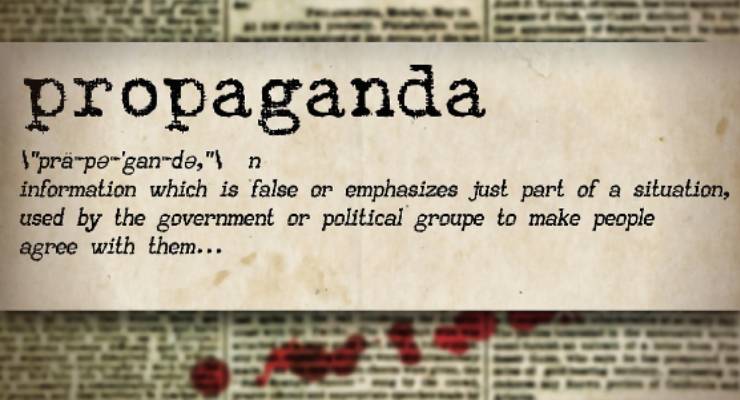
Neither system is neutral, but only one allows morality to be derived openly from theology rather than translating legislation into a shared, secular language. I understand the American tie to religion is bound to its creation, its law and the people that reside in this country. But religious importance does not need to coincide with governance, with the spewing of propaganda as fact and as a method of justifying ideology. This nation was founded by the British and therefore shares its roots in religious faith, with the UK’s theological history dating to nearly 2000 years. And yet their attempts to mitigate religious involvement in politics are so wildly opposite. The referencing to a Christian population is simply not a convincing reason for this disparity; the real difference is the cultural attitude to the validity of religion in forming modern political debate.
Normalisation Versus Marginalisation
Though what fascinates me is how ideology is shaped not only by what is said, but how it is repeatedly shown and quietly omitted as fact or normality.
In American news coverage, religion is normalised through repetition, consistent media messaging, and advertisement. It becomes familiar, expected, and begins to become one with the culture of American media. Religious motivations are expected to the point where even its people are aware of the blatant coercion in the media agenda. In discussions with American people, they seem to feed me the same response: “that’s just how it is”, or “there is no unbiased news station”, or “it’s a problem, but what can I do?” It’s scary the level of defeated acceptance that has embedded into the country whose mantra is freedom and bravery.
In British coverage, religion is marginalised through absence as it appears in the reported moments of violence or controversy, pairing its mention with dysfunction. Moral language is drained from political debate, replaced with technocratic reasoning and an authoritative tone.
The result is not neutrality but a debate that is loaded with opinionated rationale, but void of theological reasoning under the guise of unchallenged opposition.
The normalisation of religion in American politics is an issue I believe needs addressing. Many Christian Americans, despite their individual faith, stand in solidarity when calling for better regulation in theological messaging and question the necessity of introducing God in advertising or media inclusion.
A recent example is in Donald Trump’s presidency, where he survived his assassination attempt. Though this was an unbelievable event that shocked the world, in almost immediate effect, the president himself, alongside his flock of media publications that never show him any disdain, claimed this was only possible through divinity. They voiced that Trump was chosen by God, or else he wouldn’t have been able to survive this ordeal. Though miraculous, by framing this as “proof” of his integrity through religious grounds, it constitutes only furthering theological grounding in political discourse in America and validates his controversial presidential position as a sign of God.
My Understanding of the Disparity
Where religion is powerful is that it can answer to any question with the response of “God”, an inconceivable being that no human can justifiably understand, and this inability to grasp his nature is stated in the Bible itself. However, what I feel many Americans fail to notice is firstly the convenience of this argument in validating unmovable justification for just about anything the people in governmental power want to push forward, regardless of its impact.
The coinciding of religion in U.S. politics seems to lean more to the conservative side of the spectrum which though unsurprising, can make for a convoluted backing of political reasoning and media. One news station that struck me was Fox News. I was completely thrown by their lack of journalistic rigour, inability to critique Donald Trump or any conservative ideology, and an intense pairing of religion into their argumentative commentary. What shocked me the most was their branding including the lexis “news”, which seemed almost the most distant word from actuality.
What this showed me was the stark difference between what the word “news” means in the two nations and explained clearly the decrease in media trust amongst citizens. As I watched the commentary, the adverts that followed, the news anchor engaging in debate with her own opinions, this “news” appeared closer to a talk show than the puppet display of journalistic integrity it attempts to show.
It was a shock to me how polar the legal disparity was in theological regulation, and how religion was essentially as valid in political debate as the laws itself.
What the News Quietly Teaches Us
Watching the news in both countries, I have realised that the media does more than just report reality; it constructs facts from opinion and instructs audiences what is acceptable to believe publicly.
In the United States, religion is taught as relevant, powerful and politically valid. In the United Kingdom, it is taught to be private and obsolete in political discourse.
Neither approach resolves the tension between belief and power but simply displays how different nations manage it differently.
But when faith is allowed to justify authority without question, and the moral language of a nation is so tightly knitted into a theology that frankly can never serve unanimity within its citizens or definitive proof of its existence, it becomes a dangerous contention between peace and opinion. Margins of secular, philosophical rationale disappear, and then in succession, something is lost in both cases: scrutiny and meaning.
Jack Jones says
I feel I just violently puked up a jaded response to the wonderful article you wrote. Thank you for caring for me and mine and your brethren across the Atlantic. I appreciate all your love, help and concerns. We need it, Jack