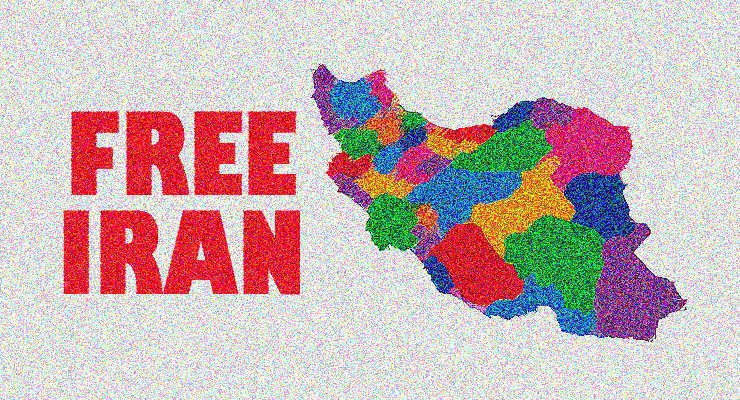
A nation rises, and the world is asked to decide
On December 28, 2025, shopkeepers in central Tehran began closing their businesses in protest against rapid currency devaluation and deteriorating economic conditions. What started as localized commercial strikes quickly spread. Within days, demonstrations and work stoppages appeared across the country. Local reports indicate protest activity in more than 180 cities, a figure also reported by CNN in its coverage of the nationwide unrest, making this wave of unrest one of the broadest episodes of mass mobilization in the Middle East in recent decades.
Iran has witnessed nationwide protest movements before. What distinguishes this moment is the emergence of a clearly articulated political alternative. Prince Reza Pahlavi, son of Iran’s late shah, who left Iran with the royal family following the 1979 revolution, has spent decades in opposition to the Islamic Republic. In recent months, he has increasingly emerged as a focal point for parts of the protest movement seeking an organized alternative to the existing political order.
The events of January 8 and 9 were an immense turning point in the history of civil resistance against the regime. Millions of people throughout the country responded to the call for demonstrations by Crown Prince Reza Pahlavi, according to Time magazine.
This unprecedented presence of people from every walk of life and all age groups not only stunned the world but, more than anything, rattled the regime. Shortly after the peak of protests on Jan 8, the regime, seeing itself at a point of no return and facing utter weakness in front of millions, decided to respond with bullets to prevent further collapse, The New York Times reported.
What started as peaceful protests instantly became scenes of mass killings, as the regime decided to gun down thousands of its own citizens to prolong its existence, with thousands more wounded and many arrested, according to reporting by NPR.
One unexpected element for the authorities, according to Reuters, was the participation of merchants and shopkeepers. For years, the regime has portrayed commercial sectors as reliable supporters. Their visible involvement in strikes and demonstrations challenged that assumption. Despite repeated warnings from senior officials and speeches promising decisive action against protesters, demonstrations continued through January 9, when large-scale crackdowns were reported.
Although the ayatollah’s regime shut down the internet and cracked down on all modes of communication, from mobile networks to landlines, a narrow glimpse of events inside the country remains available, in part due to the presence of Starlink equipment, the Guardian highlighted.
At the time of writing, approximately more than 16,000 deaths in this movement have been reported by the Sunday Times, making it one of the largest massacres of modern times in Middle Eastern history.
The mullahs have sealed all means of communication to continue their crimes against humanity in complete digital darkness and away from international observation. The world now carries a crucial responsibility to take note of these events and respond to them as a human rights imperative.
At this point, from outside, it may appear that the protests have subsided due to the heavy presence of security forces in almost every public space and the fear of being shot immediately. However, the public has not lost confidence and is eagerly awaiting external developments that could alter the regime’s security balance, particularly after multiple occasions when President Trump stated on Truth social that intervention would follow if the regime harmed protesters.
What makes this uprising different is that we now have the elements that allow it to be called a movement rather than isolated protests. The Iranian people have never been this resolute and clear in their objective, which is toppling the regime. The regime has already fallen in the minds of the public, and its institutional structure is expected to follow the same pattern.
Alongside this, we are currently seeing signs that are indications that the regime is losing its international legitimacy altogether. The withdrawal of Iran’s Munich Security Conference invitation and the revocation of the Iranian Foreign Minister’s invitation to the Davos summit were confirmed by POLITICO. These steps signal a clear diplomatic distancing. In parallel, Argentina’s designation of Iran’s IRGC Quds Force as a terrorist group, reported by The Times of Israel, and other international actions reinforce this trajectory. Such pressures must continue to isolate the regime diplomatically and economically, as demonstrated by President Trump’s 25 percent tariff on countries trading with Iran, reported by The Washington Post.
What we need to emphasize most is the fact that the lethal repression of this magnitude in a mere two days has no instance in modern times, and the figures may even be much higher than anticipated. This massacre alone shows that the regime is at its weakest point ever.
Now, let us once and for all ask ourselves a simple question: if this regime can inflict such atrocities on its own citizens, imagine what they could do to undermine global peace and security? It is only a matter of time before the consequences extend beyond the country. Supporting the Iranian people to get past the Islamic regime is helping the world secure its stability. They are calling on foreign help, and the world should respond, for the sake of their own common future.
When wronged people rise with empty hands, the world’s indifference becomes a choice.
Adrian Tawfik says
Great article Ali. Welcome to the DC team! Power to the people! May the people of Iran live in peace and democracy soon.
Ali Karamifard says
Thanks for the warm welcome! I appreciate it and share that hope for Iran’s future.