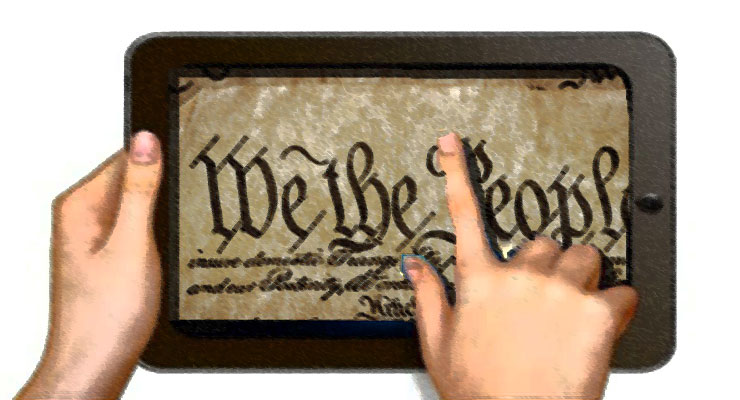
 One of the most important features of any form of democratic government is friction. It slows things down which helps to see exactly what changes are needed and if the desired fixes will actually meet the need. It also helps moderate the most extreme parts of any government or institution. However, the downside to this form of government is that it is slower to respond to people’s needs. In a society where patience is a virtue and people have attention spans to let that friction occur, then democracies work. But in today’s society the attention span is much shorter and life is a lot more frictionless than it has been in human history.
For example, if someone wants food or an item immediately they can go online and get what they want instantly, sometimes within hours and never have to leave their home. If one needs an answer to a question, we have even moved past the traditional Google search as now we can just type it into an Artificial Intelligence app and get that answer in seconds. If someone is arguing with a friend, partner or colleague, instead of actually talking it through, engaging in conflict resolution and understanding one’s emotions, we can also simply ask an Artificial Intelligence app what to say and get the answer within seconds. The problem may be solved but what is learned along the way is that individuals do not even need to talk to one another for advice, insight or problem solving because they can get advice right from their phones.
On top of this, the amount of loneliness has skyrocketed as a repercussion of the COVID-19 pandemic. During the pandemic, people could not go out together and socialize in person therefore social media took the place of real face to face human connection, a change that has left permanent marks. While this may have helped initially, it seems that people have come to live their lives online rather than in person. As a result, communication has moved to the form of content rather than conversation. Now, in order to get the most people to “like us” and get that sugar high or dopamine fix similar to an actual meetup with people, the algorithms force people to say the most outlandish things. This may feel good at first then the cycle repeats itself over and over again, thereby creating that sugar high feeling of interacting with people. But just like a sugar high, inevitably there comes a crash that leaves people with the need to get the next hit via social media. At this point, para-social relationships are developed right in one’s pocket on their phone. This illusion of social connection that is created by para-social relationships is adding to the loneliness epidemic as well as the downfall of democracy.
Life has become so frictionless that we expect our government and our leaders to act just as fast as social media and para-relationships and fix problems at a snap of finger. A democracy is not that form of government where I alone can fix it. It is messy, hard, full of difficult conversation, debate and contradictions. When democracy is operating properly, it is an amazing and beautiful system that can benefit the most people. Almost all countries in the G7, except China, practice forms of democracy and capitalism. Some of the most beneficial things to society came from the friction democracy allows in forcing people to work together to get things done. A good example was with the rise of labor unions at the turn of the 19th century Gilded Age in America. The unions had to fight the rich and powerful to secure weekends off, child labor laws and the forty hour work week. This is an example of where changes in technology led to a situation where the existing system was not working for the people and the people fought for a better one. In democracies, this process involved protest, mass organization and plenty of debate and legislative experimentation. Currently, America is in another form of a Gilded Age but this time the big question is if people will stand up and fight for change or will they become distracted by entertainment so much that they laugh their way right out of a democracy.
In the “Revenge of the Sith” Star Wars movie, one of the famous lines from Natalie Portman’s character is, “So this is how liberty dies… with thunderous applause” after the Emperor restructured the Senate to form the first Galactic Empire. It happened in a blink of an eye without thought or friction. Having freedom for all is a difficult thing to accomplish, however this is the ideal that America was founded on. Will we let life becoming easy and frictionless stop us from accomplishing what our forefathers wanted us to attain?
Let us return to a world where embedded institutions of friction force society and government to think critically. We are starting to see some pushback to this frictionless life in our culture already. For example, with some states in America banning cell phones in schools can be seen as a move toward pushing young people to learn and think for themselves without an algorithm, Artificial Intelligence or Google to do their thinking for them. Australia’s banning of social media for children under the age of 16 is another good example of this. These efforts can help reduce frictionless parasocial relationships and might encourage people to go outside and talk to one another. I believe that so much more needs to be done regarding regulation of algorithms and Artificial Intelligence. Putting your phone down and getting away from technology is not just good for you, but good for our democracy.
Marie Prete says
When I read this I immediately thought of what is happening in our world and government today!We need to realize that we cannot take our democracy for granted. It is very fragile and can easily turn into an autocracy.
I hope you keep writing auto cool like this to make people think and realize that freedom must be fought for. Thank you, Jordan Pecora for your wonderful insight.