 In the early weeks of 2026, the streets of Minneapolis became unexpectedly dark. What began as an immigration enforcement regime has morphed into a national confrontation over state coercion and shone a stark spotlight on the mounting contradictions within America’s democracy. Two American citizens, both 37-year-old residents of Minneapolis, were fatally shot by federal immigration officers sent to enforce Operation Metro Surge. This is a huge Homeland Security deployment dedicated to apprehending undocumented migrants and increasing federal authority within the city.
The deaths- first that of Renée Good and then Alex Pretti, an active intensive-care nurse with no criminal record, sent shockwaves through a nation who have long been accustomed to witnessing state-inflicted violence, predominantly on the marginalised and under-privileged demographics. Both the victims being white U.S. citizens was an ironic twist in this tale of brutality and one that underscored something deeper. It demonstrated that violence is not an aberration at the edges of the system, but a symptom of its core contradictions.
Liberal Democracy and the Myth of Consent
The American Constitution proclaims its proud foundation of freedom, upholding the sentiment: “We the People”. It enshrines sovereign dedication to procedural rights: due process, equal protection, freedom from undue government interference. In liberal democratic theory, these rights form the basis of political legitimacy. The state is supposed to heed the will of its citizens and be held accountable for its failures.
Yet in Minneapolis, this promise has been cast aside. Local leaders, including Minneapolis Mayor Jacob Frey and Minnesota Governor Tim Walz, have publicly rebuked the federal operation. In fact, they hold steadfast in their calls to remove federal agents whose presence has escalated tensions across the state and have now seen the fatalities of two American citizens. Critics described the deployment as a “federal occupation” of the city, and local officials have pleaded for restraint and accountability.
Despite these desperate calls, the agents remain. They continue to carry out massacres of unwarranted stops, confrontations, and ultimately fatal shootings, all while democratic institutions toil and fail to assert any control over them. The state’s monopoly on legitimate violence was exercised without the consent of the governed, in ways those governed found fundamentally illegitimate.
In Minneapolis, these deaths- following just weeks from each other are the distraught consequences of long-abused state power. Whether or not their actions were defensible in the letter of federal law, is a matter for Congress to discuss. But within the court of public opinion, that sovereign power acted in disproportionate force against citizens who have long objected to its presence.
Marx Insight: The State as an Instrument of Class Power
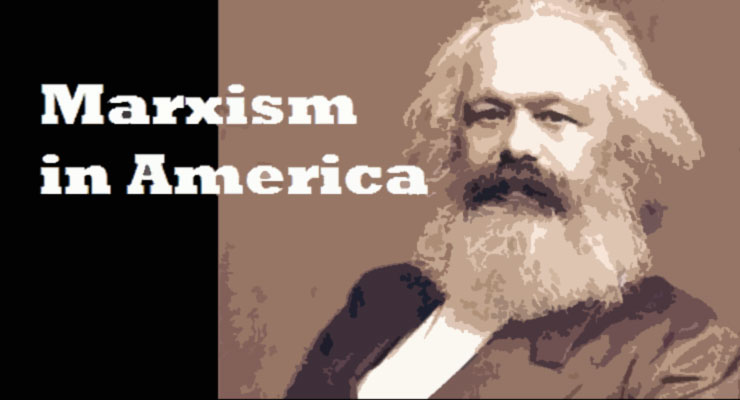
To unpack these events, it helps to turn to Karl Marx, not as an archaic revolutionary zealot, but as a theorist who foretold the weaponisation of state power and violence while maintaining its outlandish claim to democratic legitimacy.
Marx’s writing on the state is often misconstrued as simplistic statism, though it provides a powerful stance on how to conceptualise this moment. For Marx, the modern state is not a neutral arbiter that merely governs a society; it is a material institution embedded in class relations. Its laws, its police, all its coexisting bodies operate not in a sphere of ensured justice, but in mechanisms of context within a capitalist society, where economic power and social hierarchies mould political life.
By this token, the state’s arbitrary claim to represent “the people” is nothing more than a guise to mask their ulterior agendas seeking fulfilment of goals that expedite democratic will and prioritise state power. In the reproduction of social relations that protect private property, enforce social order and manage surplus of unwanted populations, the state slowly carves the sculpture of political and democratic dominance while shunning those who interfere. The institutions of coercion, from police forces to federal agencies like ICE, are not exceptions to democratic rule; they are part of its structure.
While an agency like ICE is bestowed with far-reaching power, shielded from public rebukes, local governments wield no control over its dismantlement within Minneapolis. And so, the hard truth reveals itself: liberal democracy promises self-governance but, in turn, must coexist with a state capable of imposing needless violence beyond the reach of popular control. Two have paid the price, and in due time, more will likely follow.
This bitter reality is forthcoming in disputing America’s proud claim of unanimous liberty. As Marxian theory predicts, the protections of constitutionalism can and are undermined by the power of the state, especially its capacity for violence, which is insulated from democratic correction. Minneapolis did not expose a malfunction of the system; it revealed the system working as designed. Murder charges for some, courageous acts of defence for ICE.
Marx understood such bourgeois law not as a failed shield against power but as an active operative that excuses illegitimate power by translating coercion into procedure. In this context, Constitutional freedom does not prevent violence; it reorganises it into a lawful form to be exercised upon the will of those given federal authority. American citizens have been encouraged to experience the Constitution as a protective barrier for liberty, seemingly separating them from arbitrary authority. Yet this belief itself is ideological. Law appears as an autonomous force, detached from power and presented as a universal rule. However, in practice, it is inseparable from its authors’ interests. Somehow, ICE’s legal abstraction of murder does not falter the Constitution; it kills citizens under the banner of jurisdictional enforcement.
Here, political alienation becomes acute. Minneapolis citizens who understand themselves as obliged participants in a democratic order are confronted with a state that relates to them not as political equals, but as objects of administration. Marx’s concept of alienation extends beyond labour into politics, reiterating that individuals governed by institutions that act in their name remain perfectly inaccessible to their control.
ICE’s power lies less in deportation itself than as a body of permanent uncertainty. A deportable population is easier to exploit, and a suspect population is easier to govern. Enforcement becomes a means of disciplining labour and managing social risk. Crucially, this logic does not halt at the boundary between citizen and non-citizen. As ICE’s enforcement intensifies, citizenship seems a weaker armour to Minneapolis residents, of which two who have paid the price.
Marx warned that capitalist states would increasingly rely on bureaucratic force to manage contradictions they could not solve politically. ICE is precisely this bureaucracy. Expansive. Militarised. Increasingly detached from democratic mediation.
Conclusion: Democracy at the Point of Exposure
What unfolded in Minneapolis should not be understood as an isolated tragedy or a simple policy failure. It was a moment of exposure that illuminated the inherent design of state forces. It was not an accidental compromise of democratic violence, but one granted by a country with a history of opaque legality for some and damnation for others.
Marx’s relevance lies not in offering a call to abolish democracy, but in insisting on its analysis. Without popular control over state institutions of enforcement, democratic ideals remain nothing more than fragile abstractions easily undermined. Minneapolis does not mark the end of American democracy but reveals its limits.
Democracy, if it is to mean more than rhetoric, must extend beyond routine ballot and rights on paper into transparent restraint of state power. Until that time, institutions like ICE will continue their reign of terror amongst anyway who challenges, operating within a futile constitutional freedom that exists symbolically even as its manifestations guarantee its erosion.
Jack Jones says
Democracy, if it is to mean more than rhetoric., that is a beautiful and poignant address. Transparent restraint of state power. We in America are use to deregulation or lawlessness. If you protest, chances are you will be hurt, your picture taken and cataloged. You’re right about the abuses and they are definitely top down or class defining and imposing it’s will. We can are fighting back. It’s relentless here in the states there are so many vile politicians and those that support, fascist agenda. If we ever get the upper hand there needs to be an accounting. I’m tired of watching the villains go free. I’m not a big law and order guy. Just tired of the class violence and having to watch my countrymen/women abused by it