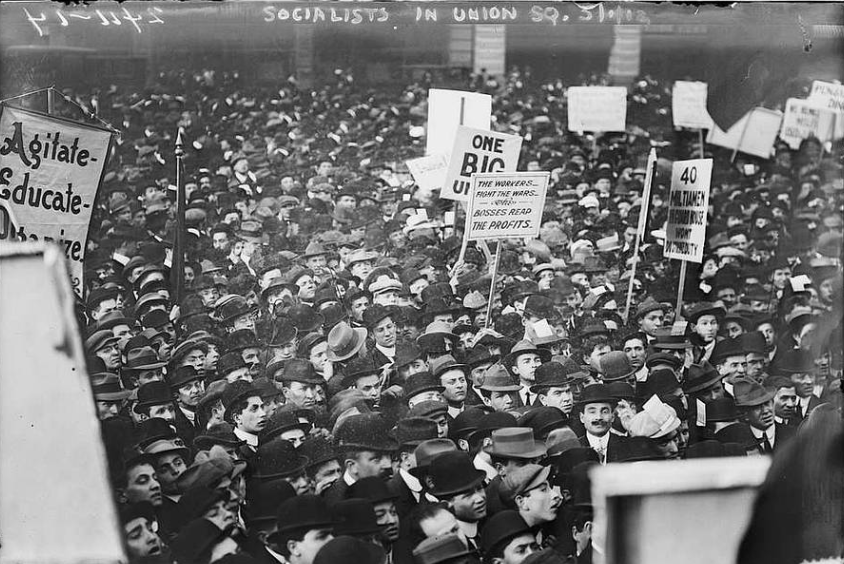
Within the Western world, socialism is considered a fallacy, a fantasy, a regime that can simply never work. The word itself carries a peculiar moral weight, spoken with caution and certainly not a wise choice of contention at a dinner party. If it is not promptly dismissed as soviet drivel, it remains a nuance of existential threat. This reaction is remarkable not because socialism is beyond criticism, but because it is so often denied the basic conditions of debate. The gavel of opinion is struck before its ideas have been examined. This pre-passed judgement of any leftist regime seems a canon reaction within Western culture that convolutes much of civil intellectual debate around societal structures and failures.
What makes this hostility specifically significant is its flawed correlation. Capitalism, despite its extensive and continuing history of exploitation, crisis and violence, is rarely subjected to the same moral attack and accepted as the fundamental functioning of society. Capitalism is thus viewed as the default, as if its own infrastructure held the same finality as the law of gravity: it simply just is. Its deceits and failures are treated as inevitable bumps in the road to success and necessary sacrifices, while socialism is judged in the climactic spotlight of its worst historical moments. To understand why socialism is handled with such fear and dismissal throughout the West, we must trace how this connotation was formed, institutionalised and passed down.
Before socialism became synonymous with twentieth-century authoritarianism, it was perceived as a threat for another reason: it challenged capitalism. In the nineteenth century, Karl Marx did not present socialism as a utopian fantasy, separated from actuality, but as a critique of the current institution rooted in material conditions. His work questioned the assumption that capitalism was the assumed natural order of civilisation and the one remedy for societal progress. By exposing how private ownership, wage labour and surplus profit were historically produced rather than divinely obtained, Marx challenged the belief that existing economic factions were permanent conclusions to achieving prosperity.
This revelation alone was enough to provoke resistance and questioning into the why. Marx’s critique did not merely condemn inequality but reframed capitalism as a regime that constructs this inequality itself. Social disparity did not just spawn from human identity or nature; it was slowly crafted, reinforced and ingrained through covert capitalist operations, all to benefit the system of its founding. In making this discovery, and with its teachings gaining popularity amongst the masses, Karl Marx had rocked the calm seas of simple obedience and proposed a new outlook on industry and paid labour. Socialism, at this stage, was not just dangerous because its thought had been recognised, but because it explicitly made visible what had previously been obscured.
The twentieth century would go on to radically transform this perception. With the rise of the Soviet Union, socialism became inseparable, in Western political lexicon, from state authoritarianism. The atrocities committed under Stalinist rule were real, devastating and demand no less denial or minimisation. Yet what followed was an unfortunate, confused distinction between ideology and governance. Socialism itself was placed on global trial, convicted not as one historical manifestation among many, but as an idea that sought to insight massacre, fear and control.
From this point forward, socialism was no longer debated as a political or economic approach; it was treated as a historical catastrophe that was never to be implemented again. Its association with repression and dictatorship became cemented in Western ideology, and such its analytical foundations and reason were lost to time. The possibility that socialism could exist outside of a Soviet model was deemed implausible, not even through the means of civil discussion, but a known, unspoken truth amongst those in the West.
The most aggressive foreclosure of any radical left ideology was practised within the United States. During the mid-twentieth century, McCarthyism transformed suspicion of socialism into a matter of national loyalty. Careers were destroyed; lives were put on hold, and dissent was reframed as the ultimate treachery to your country. Socialism was not simply wrong, it was communist, soviet and above all un-American. This era did not lightly reprimand socialist thought but induced consequences on free-thinking and instilled lasting fear into the masses, forming a stagnant cultural memory. Long after the end of the Red Scare, its logic was far from diminished and still shapes media, education and political discourse. Furthermore, due to the impressively lax American broadcast laws, there remain many channels on cable TV that are branded as news platforms or simply run to exhibit anti-left propaganda, legally entitled to use slogans like “the left wants to kill America”.
To no surprise, present-day American public opinion is still warped around traditionally conservative, capitalist ideology. Surveys consistently show that socialism is viewed with deep mistrust and often equated to authoritarianism or economic collapse, while capitalism is just ingested as a functioning regime that is synonymous was American freedom. This persistence cannot be explained by just historical outcomes abroad but is further the conclusion of a state-run execution of guided ideology: decades of political conditioning in which socialism is the ultimate felon.
The United Kingdom presents as a subtler but equally interesting case. Unlike the United States, Britain has implemented policies rooted in socialist principles and public welfare, the most notable example being the free National Health Service. However, these institutions are rarely embraced under socialist derivation. Instead, socialism is tolerated only when renounced. It is commonly reframed as pragmatism rather than an ideology and similarly echoes the disdain of its historical grievances. When brought into conversation, its nuance typically arises as reckless, radical and given the assertion of impossibility.
The tension became particularly visible during the leadership of Jeremy Corbyn, whose association with democratic socialism managed to incite a media and public panic, due to its foggy and confused meaning. Policies focused on redistribution and public ownership were cast under the spotlight of existentialist threats to the British economy. Once again, socialism was not rejected under genuine contention but moral alarm. The very idea is dangerous, regardless of its motive, regardless of its mantra, regardless of its foundation in shared prosperity.
Marx is useful here not as a revolutionary oracle, but as a diagnostic thinker. His insight was not that socialism is the only route to salvatory freedom, but that capitalism, for all its success, has an impressive, extensive list of failures that are not shown the same malice or contempt despite their severity. His understanding of how capitalism instils inequality, socialist fear and disdain for alternatives opened a path for socialist debate and other avenues of societal thought. His work raised questions about the infrastructures praised as natural order and who truly benefits from them, rather than the guise of eventual prosperity in meritocracy.
The everlasting apprehension for socialist thought in the West reveals the truth in how ideology is moulded, through a rigid system pumping this generative consistency in socialist scorn. The danger is not in socialist empathy but that the questions around its legitimacy are condemned, redacted before an attempted answer. When an idea is considered dangerous before it is even examined, it is often because it exposes something uncomfortable, not because of incoherence. This uncomfortable thought in question is a challenge to the deemed inevitable, the deemed normal.
If the West wishes to claim unmoving confidence in its democratic values, it must concede room for ideological conflict that goes beyond sanctioned boundaries. Socialism does not need to be embraced without critique but should be permitted the breathing space to be debated with integrity rather than instantaneous dismissal. Without that openness, democracy risks becoming a carefully managed performance, constrained within proposed free thought where its range of acceptable ideas is narrowed further than its democratic rhetoric suggests.
A democracy that fears certain philosophies more than their conceded consequences has already set the limits to its own freedom, in doing so resembling the authoritarianism it claims to reject.
Adrian Tawfik says
Welcome to the team Adia! Glad to include a Brit in our discussions. Socialism is I think becoming less of a dirty word in America, especially among the young and the left. Thanks Bernie! I always thought Marx is underappreciated in America and probably still is. He is an essential historian and social critic of his time and his work is still so valuable even if I don’t agree with everything he said. But as Marx said, “Democracy is the road to socialism”.
Jack Jones says
I’m amazed my self, living in America my whole life. The oligarchs or billionaire class completely understands the notions of socialism. They enjoy the tax breaks, the use of the school system that educates their cogs in the wheel. The police that protect them as well as the military that do their bidding for their imperial exploits and confiscation. This issue in America, is we the people don’t understand what a symbiotic relationship means any more. Our lords have us going to church praising god for the injustice, while we go hungry in the fields. Sweden, Denmark, Canada all look like a utopia in comparison. The privileged thugs that are in control are telling us how evil it would be for us, to be doing what they enjoy. Our confused society has been lied to by the press, corporate America, business schools and the cult of evangelical Christianity. Our society hopefully will wake up and realized that these people are just saying what is needed for them to have the vast majority of the cake. That’s all it is. When we share, we end up getting the best teachers for our kids, the best doctors, and people doing and being rewarded for their jobs and good deeds. A happier society emerges because people trust the government more and don’t feel exploited. More civil engagement occurs and the people are happy that they have a say or being represented. The biggest con has happened to the most powerful nation on earth and they pulled it off by having us worship filthy mammon instead of each other. You my fellow citizen are what is important because I would have nothing without you! Thank you for your great article, Jack