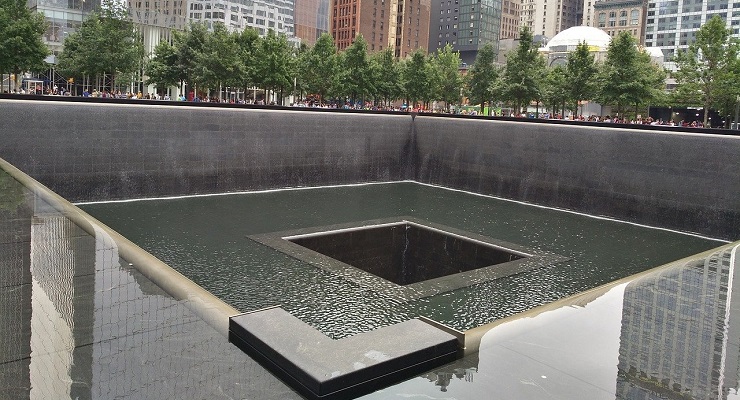
Following the 9/11 attacks, the eminent French philosopher Jacques Derrida had an intriguing conversation with Giovanna Borradori devoted to the incident. As twenty years pass after that cataclysmic event, Derrida’s rigorous, perhaps somewhat esoteric analysis of the mainstream discourse of the global geo-politics that resulted in the fateful attacks reverberate to this day. Especially as the Federal Bureau of Investigation (FBI) declassified the documents linking Saudi officials to the attacks, his deconstructive delineation of the events that led to the attacks requires closer reflection. This dialogue was published with the title ‘Autoimmunity: Real and Symbolic Suicides’ where Derrida delved into the psycho-social, political and philosophical intricacies of the broad contexts of the event in three distinct sections. The linguist significance of the title becomes apparent, not only as we read further into the dialogue, but as we peruse the documents FBI released and follow the thread of the investigation as it had begun even before the attacks occurred.
In the introduction, Derrida contends ‘…”September 11″ is also, still, and in many respects, a distant effect of the Cold War itself, before its “end,”’. A surprising contention, many might say. But a careful and reflective re-reading of modern history would no doubt speak otherwise. Following the end of World War II, the strategic exploitation of the Middle East by both the Soviet Union and the US not only altered the political and economic landscape in those countries significantly but also went on to have a profound impact on the way, Islam, as a religion was practiced there. The end of the Cold War shifted the nature of the socio-political alliances these forces had with the former and current global superpower, but without any impact in the already deeply entrenched economic relations that had built up for the decades. While almost all the Muslim-majority countries in the Arab world had economic relations with the United States of America (USA) and the West (especially in form of petroleum and weapons), Derrida aptly points out Saudi Arabia as ‘the most privileged enemy of everything represented by a Bin Laden or Saddam Hussain’. Not only is Saudi Arabia one of the most important oil-producing countries in the world, Derrida continues – it fuels all the hotbeds of Arab Islamic fanaticism and terrorism. Arguably, one of the first fatal corollary of this toxic alliance was the attacks on the Twin Towers and Pentagon on September 11 2001 where it quickly became common knowledge that most of the Al-Qaeda operatives who carried out the attacks were Saudi nationals. Derrida identifies this as ‘the first symptom of suicidal autoimmunity when the violence and aggression inflicted emerges from within.
The heavily-redacted contents of declassified documents confess the veracity of Derrida’s postulations he put forward even before investigations into the Saudi links began and drew public attention. As two decades pass following the fateful catastrophe, extensive investigations into the event revealed that two of the hijackers Khalid al-Mihdhar and Nawaf al-Hazmi (both hailing from KSA) had extensive contact with top-level officials from the Saudi Embassy in the US before the attacks were executed. Arguably, the declassification did not reveal any new information to the world – it merely confirmed what has been known for a while now. The most traumatic tragedy of that fateful day is how the brutal massacre of those three thousand innocent people spurred the beginning of another brutal massacre approximately six thousand miles away in Afghanistan – one drawn out over twenty bloody years. Almost 50,000Afghan civilians were killed during the military occupation by the US-NATO forces, without any effective approach to rooting out the Taliban from the country, as recent events have attested. The only entities that continued to be nourished and grew exponentially during this conflict (and the numerous other conflicts going on, interestingly, in the same geo-political region) are the defence contractors and those who invested in their stocks. In fact, market analysis showed defense stocks outperformed the stock market overall by 58 percent during the length of the Afghanistan War. The unassailable truth is that this humanitarian disaster has been one of the long parties on Wall Street taking place in celebration of bloody wars and conflicts in numerous parts of the globe as it (and other entities like it) continues feeding on people’s trauma.
As Derrida put it, ‘A weapon wounds and leaves forever open an unconscious scar; but this weapon is terrifying because it comes from the to-come, from the future, a future so radically to come that it resists even the grammar of the future anterior.’ The brutal, dehumanizing way capitalism functions and operates the political systems all over the world does leave a scar on your soul – on both individual and collective levels. And the knowledge that as long as you are in the system, there is no way to predict where the next scar will be inflicted is a uniquely subliminal trauma. The loved ones of those who were killed on September 11 will no doubt attest to that.
Leave a Reply