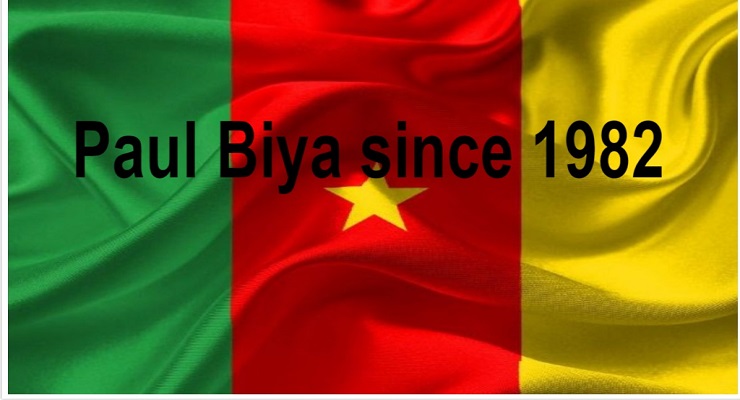
Cameroonians head to the polls Sunday in an election widely expected to extend the 36-year rule of President Paul Biya and confirm his place as one of Africa’s last multidecade leaders.
A victory for Biya, who has ruled since 1982, would usher in a seventh term for the 85-year-old and see him stay until at least the age of 92, bucking a tentative trend in Africa where many countries have installed presidential term limits. The only current African president to have ruled longer is Equatorial Guinea’s Teodoro Obiang Nguema Mbasogo.
It would maintain a long held status quo in the oil and cocoa producing Central African country where, despite relative economic stability and growth of more than 4 percent a year since Biya was last elected in 2011, many of its 24 million citizens live in deep poverty. Most have only known one president.
Secessionists
Looming over the polls is a secessionist uprising in the Anglophone Northwest and Southwest regions that has cost hundreds of lives and forced thousands to flee either to the French-speaking regions or into neighboring Nigeria. Ghost towns remain, where the few who have stayed say they are afraid to go out and vote.
Some opposition parties have united in an effort to bolster support and harness discontent about the country’s crumbling infrastructure and about Biya, who they say has ruled Cameroon like a personal fiefdom for too long. The president goes years without convening cabinet meetings and spends long stretches out of the country with his wife Chantal, most often holidaying in Switzerland.
“There are many problems. There are no roads, no hospitals. We are poor. Biya must go,” said 31-year-old businessman Emmanuel Bassong during an opposition rally in the capital Yaounde on Saturday.
The odds, and history, are against the opposition, including the main candidate, Joshua Osih of the Social Democratic Front.
‘Game is already done’
In 2011, Biya won with 78 percent of the vote in an election that the United States state department described as “flawed” and “marked by irregularities.”
The African Union and other organizations are monitoring Sunday’s vote, but opposition candidates have already complained of efforts to fix the election in Biya’s favor.
Biya’s home advantage is clear across the hilly, green capital, where thousands of posters lining the roadside and draped down the side of high-rise buildings declare “the force of experience” of the incumbent. Tailors sell fabric bearing Biya’s face that they make into dresses and suits seen all over town.
Billboards advertising other candidates meanwhile are almost totally absent.
Government spokesman Issa Tchiroma Bakary on Saturday laughed off the idea of the opposition posing a threat to Biya.
“The likelihood of his victory is beyond reasonable doubt. I am confident that the game is already done,” he said.
Fault lines
Separatists have vowed to stop the polls from taking place in the English-speaking regions, home to 5 million people, about one-fifth of the population. Residents in those areas told Reuters that they would not vote anyway because of the insecurity.
The crisis points to a central problem of Biya’s rule: his long bid to centralize a hugely diverse population in a country founded in 1961 on the promise of federalism and autonomy for its regions.
In 2016, Anglophone lawyers and teachers protested against the marginalization of minority English speakers in their professions. The government’s heavy-handed clampdown, in which unarmed civilians were shot dead, radicalized many. Armed groups formed in the lush forests of the west.
Biya did not visit the English-speaking regions during his campaign.
Separatists have vowed to stop the polls from taking place Sunday and have blocked the main highways. Spokesman Bakary said that the separatists were “daydreaming” if they thought they could stop the polls and that the government has put measures in place to ensure they go ahead.
Military vehicles were stationed throughout the northwest town of Bamenda on Friday, residents said, and shops and banks are closed.
“The streets are empty. I don’t think I will go and vote,” one local said. Since I started voting in 1997, the elections have not changed a thing.”
Leave a Reply