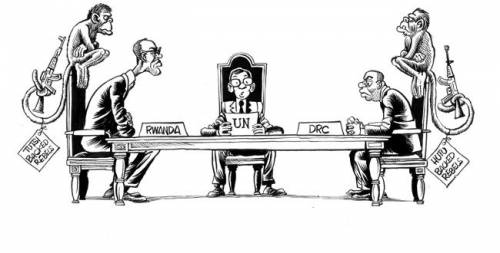
“In the light of day, the only clear observation to be had is that once again the mineral rich region the Democratic Republic of the Congo has been invaded, with violence and terror marking every footprint on the road in and out of Goma.”
by Ash Bradford
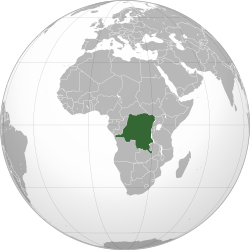
New York: Conflict has plagued the people of the Democratic Republic of the Congo (DRC) for almost two decades, amounting to well over 5 million deaths, a toll far exceeding that of all the genocides, wars, terrorist attacks and disasters in recent world history, even if combined and multiplied. But somehow, in the United States, nothing about the DRC is common knowledge. The fact is that to the average American, the DRC rings no bells at all.

Since the United Nations Security Council issued the report of the Secretary-General on the United Nations Organization Stabilization Mission in the DRC, the ears of the media have just about perked and some due attention is finally beginning to be paid. But how much blood needs to be spilled for the story to appear on the front pages of the international media?
Inside accounts of the DRC describe a harrowing scene, including the daily rape of women and young girls, massacres of unarmed civilians and children, abduction, widespread pillaging, burning of villages, and the disastrous liberation of prisoners which has unleashed over a thousand killers, rapists, rogue soldiers and other criminals upon the already tumultuous scene. Today, the number of displaced people in the DRC far exceeds half a million.
At present, some reports of the M23 Movement occupation of Goma, and their subsequent withdrawal, are covered by the major media. Some journalists seem to be playing softball with the pretty hard evidence of Rwandan and Ugandan involvement.
The report of the Secretary-General clearly states that the strength and efficiency with which the M23 is able to act, comes only through the military and tactical support that has been bestowed upon them by President Yoweri Museveni of Uganda and most essentially by President Paul Kagamé of Rwanda. Due to this external assistance, the M23 is amply supplied with belt-fed machine guns, anti-aircraft weaponry, high-tech night vision equipment, mortars and other weaponry.
By now it is evident that the DRC itself requires external assistance at least equal to that which the M23 are receiving. The effect of media coverage cannot be underestimated, as herein lay the power to herald a message of urgency. The media also possess the power to influence policy makers and international leaders in disseminating the facts and rallying social opinion. This is how international pressure can be enlarged and sustained, which is the ultimate goal in the plight of the DRC because the only non-violent means to stop this conflict is heavy international diplomatic pressure.
For instance, President Kabila’s Special Representative to the UN Security Council and Ambassador of the DRC to France, Atoki Ileka, has stated that the M23’s recent withdrawal from Goma occurred mainly as a result of US pressure.
Until such pressure is amplified, both Kagamé and Museveni will be allowed to casually refute their assistance to the M23, despite the mounting array of damning evidence against them. They will always be able to shrug the condemnations of the Secretary-General and the United Nations Security Council relying on the general public’s apathy and disregard, just as they have done for many years. And until their aggression becomes well publicized, it will remain as easy as that for them. Thus, Kagamé and Museveni will not desist until sanctions are brought upon them. And why would they? It remains business as usual.
Dangerous Neighborhood: Congo Draws Back from Abyss
At a time when the wounds of a previous Rwandan incursion are still unhealed, and as 800,000 families still mourn those who were slaughtered in the ethnic cleansing during the Rwandan genocide, echoes of the past are resounding in the current crisis. And I wonder… is there a guilt that lingers amongst mainstream press as they face the acknowledgement that they ‘overlooked’ these previous events? If we just glance back to the recent past, this is not difficult to conceive.

Bill Clinton’s government actively tried to keep the 94’ genocide in Rwanda under wraps. Subsequent reports released under the Freedom of Information Act clearly state that the US cabinet was fully aware of the “final solution to eliminate Tutsis” from the onset, and officials even used the term genocide behind closed doors. There was direct dialogue between the US government and the leaders of the genocide but no action was taken to save lives. So the slaughter continued, hidden from the world.
The experience demonstrates that media attention is imperative to the ultimate security of the Congolese people. If due attention is neglected on the international pages, it becomes all too convenient for US officials to neglect the situation at large. If the U.S. government sees no direct repercussion on the economy or national security, then sadly it’s going to struggle to act.
Lessons from A through M23
We should heed lessons of the past in the acknowledgement that in the light of day, the only clear observation to be had is that once again the mineral rich region the DRC has been attacked, with violence and terror marking every footprint on the road in and out of Goma. And this is not at all where it ends. Bloodstains still mark the streets of the DRC, women are forever traumatized, children are separated from their families, and homes are burnt to cinders. The M23 are still lurking and Kagamé and Museveni still bare their fangs.
If we finally begin shine a flood light on what is not only one of the worst ongoing humanitarian crisis in recent history but also on the repeated violations of international law, the powers that be would have no choice but to address to the awakening national and international consciousness.
The crux of the crisis is that the violence will continue to rage over Eastern DRC, doused with the fuel of lingering Rwandan and Ugandan territorial incursions until widespread media attention is drawn to the situation and international pressure is enforced through firm sanctions on the bad actors. Without such action the citizens of the DRC will never be relieved of their misery, and it will remain an open shop for Kagamé, Museveni and their M23 subordinates.
Leave a Reply