• Skip to primary navigation
  • Skip to main content
  • Skip to primary sidebar

Democracy Chronicles

Towards better democracy everywhere.

  • AMERICAN DEMOCRACY
  • WORLD DEMOCRACY
  • POLITICAL ART
  • more
    • election technology
    • money politics
    • political dissidents
    • THIRD PARTY
      • third party central
      • green party
      • justice party
      • libertarian party
    • voting methods
  • DC INFO
    • author central
    • about
    • advertise with DC
    • contact
    • privacy policy
Home | DC AUTHORS | Who Gets To Debate Republicans?

Who Gets To Debate Republicans?

June 30, 2015 by Aaron Hamlin Leave a Comment

FacebookLinkedInPinTweet

Debate Republicans

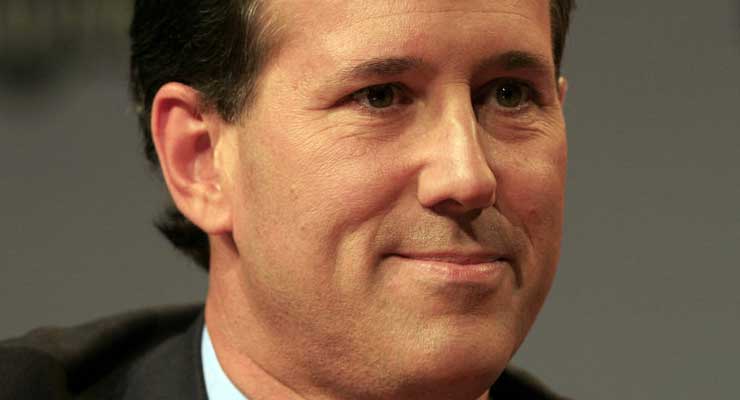
Former senator Rick Santorum is upset about Fox’s top-ten polling criterion to debate. And he’s right. It is bad. Although, perhaps his alternative criterion of letting previous senators in automatically isn’t the best either. Nice try, Santorum.

What’s bad about this top-ten polling criterion?

First, the polls ask the wrong question. Respondents shouldn’t be hearing, “If the election were held today, which candidate would you vote for?” That makes no sense. The debates are for learning about candidates, not voting for them.

Second, the polls require respondents to choose only one option—essentially plurality voting. This is the voting method infamous for dividing support between remotely similar candidates, particularly in primaries. It’s also the least expressive voting method there is, widely considered the worst voting method—period—among academics. So there’s that.

What criterion should the debates use instead?

Let’s start by getting the question right. We want to know whom people want to see in the debates. So we ask them: “Would you like to see this candidate in the debates?” That’s much more direct.

Now take away the arbitrary limitation of choosing one candidate. Instead, let respondents answer “Yes,” “No,” or “No Opinion” for each of the candidates. Any candidate whom people say yes to more than no, let that candidate be in the debate.

This will limit your pool of debaters to only a handful, but you’ll get the type of in-depth discussion among just the serious contenders. This isn’t to say that everyone else is excluded. For instance, CNN is planning a second debate that includes every candidate that polled above 1% (using terrible plurality polling). Using a Yes/No-style polling, you could have a second tier debate where the cutoff is 25%.

With this direct ask approach, you’d limit the number of debaters, but you wouldn’t limit them arbitrarily. Candidates like Jeb Bush, Scott Walker, and Marco Rubio would still likely get in. A handful of others probably would as well, although it’s hard to predict using existing polling.

If you were thinking of whether this could apply to the general election as well, it absolutely could. Although, as discussed in a previous article, the Commission on Presidential Debates isn’t interested in inclusion outside the two major parties.

FacebookLinkedInPinTweet

Filed Under: DC Authors Tagged With: Political Debates, Republicans, Third Party

Some highlighted Democracy Chronicles topics

Africa American Corruption American Local Elections American State Elections Asia Capitalism and Big Business Celebrity Politics China Democracy Charity Democracy Protests Democrats Dictatorships Education Election History Election Methods Election Security Election Transparency Europe Internet and Democracy Journalism and Free Speech Middle East Minority Voting Rights Money Politics New York City and State Elections Political Artwork Political Dissidents Political Lobbying Redistricting Republicans Russia Socialism and Labor Social Media and Democracy South America Spying and Privacy Supreme Court Third Party Voter Access Voter ID Voter Registration Voter Suppression Voter Turnout Voting Technology Women Voting Rights Worldwide Worldwide Corruption

About Aaron Hamlin

Aaron Hamlin is the executive director and co-founder of the Center for Election Science. Working from Ohio, he's been consulted on voting procedures for small to large organizations and publicly elected officials in several states. He's been published in numerous outlets and has been invited as an expert speaker at conferences across the country. Aaron is also a licensed attorney with additional graduate degrees from Indiana University and Miami University.

Reader Interactions

Leave a Reply Cancel reply

Your email address will not be published. Required fields are marked *

Primary Sidebar

democracy chronicles newsletter

democracy around the web

  • CPJ files declaration in support of detained journalist Mario Guevara 
    Source: Committee to Protect Journalists Published on: 1 year ago
  • “Musk must face lawsuit brought by voters he convinced to sign petition in $1 million-a-day election giveaway, judge says”
    Source: Election Law Blog Published on: 1 year ago
  • “Appeals court throws out massive civil fraud penalty against President Donald Trump”
    Source: Election Law Blog Published on: 1 year ago
  • “Adams Adviser Suspended From Campaign After Giving Cash to Reporter”
    Source: Election Law Blog Published on: 1 year ago
  • “Obama applauds Newsom’s California redistricting plan as ‘responsible’ as Texas GOP pushes new maps”
    Source: Election Law Blog Published on: 1 year ago