• Skip to primary navigation
  • Skip to main content
  • Skip to primary sidebar

Democracy Chronicles

Towards better democracy everywhere.

  • AMERICAN DEMOCRACY
  • WORLD DEMOCRACY
  • POLITICAL ART
  • more
    • election technology
    • money politics
    • political dissidents
    • THIRD PARTY
      • third party central
      • green party
      • justice party
      • libertarian party
    • voting methods
  • DC INFO
    • author central
    • about
    • advertise with DC
    • contact
    • privacy policy
Home | CULTURE | Study: Demand for Contraception Rose Sharply After 2016 Election

Study: Demand for Contraception Rose Sharply After 2016 Election

February 8, 2019 by DC Editors Leave a Comment

FacebookLinkedInPinTweet
Demand for Long-Acting Contraception Rose Sharply After 2016 Election
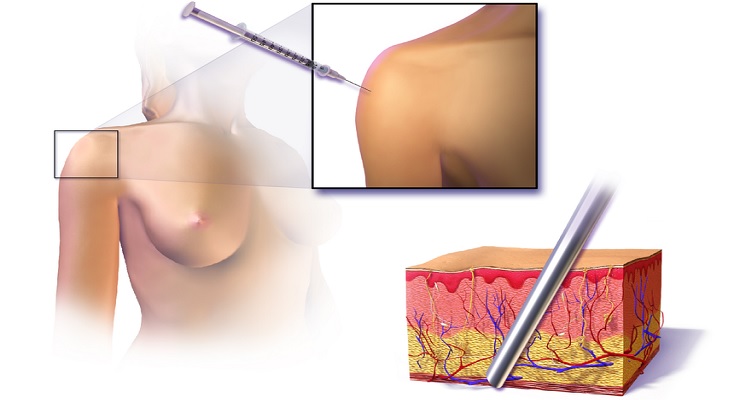
Injection Subcutaneous Birth Control – Image source

The new study by Brigham and Women’s Hospital, subtitled “Rates of insertion for intrauterine devices and implants increased by 21.6 percent in the 30 days after the election”, was authored by researchers Lydia E. Pace, Stacie B. Dusetzina, Mara E. Murray Horwitz, and Nancy L. Keating. There is a great write-up about it from Science Daily just released:

Not long after Donald Trump was elected president, descriptive reports began rolling in: Demand for long-acting, reversible contraception (LARCs) such as intrauterine devices (IUDs) and implants seemed to be on the rise. But was this trend based on a real shift in women’s use of LARCs or just due to normal fluctuations in interest in IUDs and implants or due to other factors? A new, robust study conducted by investigators at Brigham and Women’s Hospital quantifies the increase, finding that rates went up by 21.6 percent in the 30 days after the election compared to rates at the same time of year in 2015.

One of the researchers is the impressive Lydia E. W. Pace who works at Brigham and Women’s Hospital Division of Women’s Health and General Internal Medicine and the Women’s Health Policy and Advocacy Program for the Connors Center for Women’s Health. She was quoted as saying about the findings:

“LARC methods are by far the most effective form of reversible birth control available. We have seen that when LARC is made more available to women, the rates of unintended pregnancies go down. Our study tells us something important about women’s health preferences in a changing political climate. Women responded to this political event by seeking out this method of contraception, perhaps because the threat of losing access expedited a decision or encouraged them to seek out a method they hadn’t previously considered.”

Some more information from the report abstract:

Soon after the US presidential election on November 8, 2016, media and industry reports described an increase in utilization of long-acting reversible contraceptive (LARC) methods (intrauterine devices and implants). Proposed reasons included women’s concerns about contraceptive access should the Patient Protection and Affordable Care Act (ACA) be repealed during the Trump Administration.

These reports, however, were descriptive and did not control for seasonal or secular trends. Using data from a large sample of commercially insured women, we sought to assess whether there was an increase in LARC utilization among commercially insured women during the 30 days after the election, compared with the 30 days before the election and the same period in 2015.

Read the full Science Daily coverage here or view the original report here. The research was published at JAMA Internal Medicine, a peer-reviewed medical journal of the American Medical Association.

FacebookLinkedInPinTweet

Filed Under: Democracy Culture Tagged With: Election Science, Women and Democracy

Some highlighted Democracy Chronicles topics

Africa American Corruption American Local Elections American State Elections Asia Capitalism and Big Business Celebrity Politics China Democracy Charity Democracy Protests Democrats Dictatorships Education Election History Election Methods Election Security Election Transparency Europe Internet and Democracy Journalism and Free Speech Middle East Minority Voting Rights Money Politics New York City and State Elections Political Artwork Political Dissidents Political Lobbying Redistricting Republicans Russia Socialism and Labor Social Media and Democracy South America Spying and Privacy Supreme Court Third Party Voter Access Voter ID Voter Registration Voter Suppression Voter Turnout Voting Technology Women Voting Rights Worldwide Worldwide Corruption

About DC Editors

We are your source for news on the all important effort to establish and strengthen democracy across the globe. Our international team with dozens of independent authors are your gateway into the raging struggle for free and fair elections on every continent with a focus on election reform in the United States. See our Facebook Page and also follow us on Twitter @demchron.

Reader Interactions

Leave a Reply Cancel reply

Your email address will not be published. Required fields are marked *

Primary Sidebar

democracy chronicles newsletter

democracy around the web

  • CPJ files declaration in support of detained journalist Mario Guevara 
    Source: Committee to Protect Journalists Published on: 1 year ago
  • “Musk must face lawsuit brought by voters he convinced to sign petition in $1 million-a-day election giveaway, judge says”
    Source: Election Law Blog Published on: 1 year ago
  • “Appeals court throws out massive civil fraud penalty against President Donald Trump”
    Source: Election Law Blog Published on: 1 year ago
  • “Adams Adviser Suspended From Campaign After Giving Cash to Reporter”
    Source: Election Law Blog Published on: 1 year ago
  • “Obama applauds Newsom’s California redistricting plan as ‘responsible’ as Texas GOP pushes new maps”
    Source: Election Law Blog Published on: 1 year ago