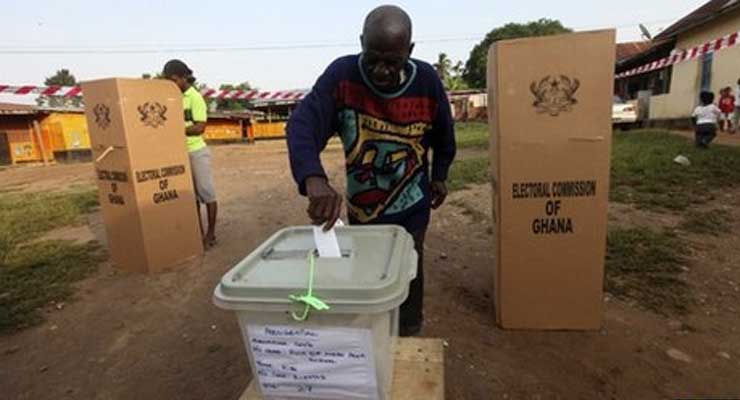
Who owns the credit for providing public services in Ghana? Do we reward a good steward or one that embezzled the national cake? Ghana struggles indeed to understand a clear divide between public and private “goods” when defining its government, and in search for political power. Certainly, we explore here the term “goods” as defined in economics as “a commodity, or a physical, tangible item that satisfies some human want or need, or something that people find useful or desirable and make an effort to acquire it”. Therefore, has Ghana commodified its government? Are the current political debates and campaigns supporting selfless public service or just a quest to fulfil ardent political fantasies?
In 1957 when Ghana gained independence, it was a popular notion among the people that political power and its transition to the people will create economic and social change – in the right direction. Common growth and evolution of the African continent was the mantra of the first president of Ghana, Dr. Kwame Nkrumah. At least the majority acquiesced.
Ghana has over the years been a beacon to the African continent and beyond, in all its political and socioeconomic victories. With some tangible steps towards democratic consolidation in the wake of the 90s, Ghana continues to witness some of the most acrimonious pre-election tension between ruling party and opposition parties and even intra-opposition turmoil.
To divulge the political environment, there is little discourse on the issue of rights to vote in democratic practices in recent elections in Ghana and Africa as a continent. A study from the US Institute of Peace, “Voting Fear”, by Bekoe (2012) presents pioneering work on the scope and nature of electoral violence in Africa and investigates the forms of electoral violence in Sub-Saharan Africa, spanning 1990 to 2008.
 Filling a gap in the existing literature on electoral violence, “Voting in Fear” offers concrete ground for revisiting trends of electoral violence in Africa. Ethnically marginalized groups and individuals who reside in rural regions in Ghana, Liberia, Mali, and Cote d’Ivoire and across the northern belt of Sub-Saharan Africa have their voting right repressed if not taken away. Collier (2009) in his renowned book entitled “Wars, Guns and Votes: Democracy in Dangerous Places”, investigates violence and poverty in developing countries and shares a cautionary warning about the prevalence of ethnic divisions and policy failures.
Trending scholarly works have revealed “dirty tactics”, some illegal, to alter voting behavior, and are purported by political surrogates and their likes. Traces of unregulated elections across African states allow candidates to manipulate voter turnout and the use of violence, vote buying and fraud to mitigate democratic precedence (Collier & Vicente, 2008: Fafchamps & Vicente, 2009). Why is it still trending in 2016, and in the coming elections in Ghana?
Notwithstanding, elections across African states have been acclaimed at some point to be free and fair but there is trending evidence of logistical and other problems; a topic for another article. However, with all the issues around voting right and elections, does that have anything to do with the concept of government and/or public administration in present Africa, and Ghana to be specific? Certainly!
Schools are failing; especially basic educations in Ghana, however there are controversies about who provides Chalks to Schools. In article 25 of the Ghana Constitution, it states that “(1) All persons shall have the right to equal educational opportunities and facilities and with a view to achieving the full realisation of that right – (a) basic education shall be free, compulsory and available to all”. Whilst “School facilities” are combinations of the buildings and grounds, parking lots, playing fields, and fixed equipment, the provision of and the use of the facility must be consistent with the primary educational function of the school. Therefore, since when did this constitutional provision become an individual decision for political parties and their proxies? This is a fundamental right and therefore “public” not dictated by the mood swings of any Ghanaian leadership or any interested party thereof.
Whilst there is no one answer to the dilemma in Ghanaian public administration; however there is definitely some issues of public versus private ethics and how the Ghanaian people perceive the role of government in the development of the country. The educated politicians have capitalized on the apparent ignorance of the masses, and the proxies are disseminating untrue political campaigns to provide education, healthcare, etc., the same things that a mandated government is failing to provide each day, and over the years since independence. Not much is being done to address the economic development and curve the country’s debt crisis.
Many scholars have tried to theorize the issues of corruption and confusion with public and private goods especially in developing nations in Africa. Hellsten and Larbi (2006) of University of Birmingham, UK underscored the notion that “in the context of developing countries with collectivist culture, it is often assumed that there is no clear distinction between one’s public and private roles and between professional and personal ethical commitments and that corruption is part of the culture”. Unfortunately the leaders in these developing nations are aware of these concepts or practices. Most have gained the most education possible to understand the plight of the common voter, but on the contrary, they manipulate the citizenry.
The world of scholars and advocates including those of the responsible Ghanaian leadership and stakeholders are calling for a change and redirection of the county and indeed the continent, to embrace administrations that will be honest with the mandate to provide public service, and not to achieve reveries.
Viva Ghana!! Peace!
Emmanuel Asiedu says
I really think Ghana has a better chance in this. We must all look for ways to help out. https://hometuit.blogspot.com/2017/05/ghanas-free-shs-review.html