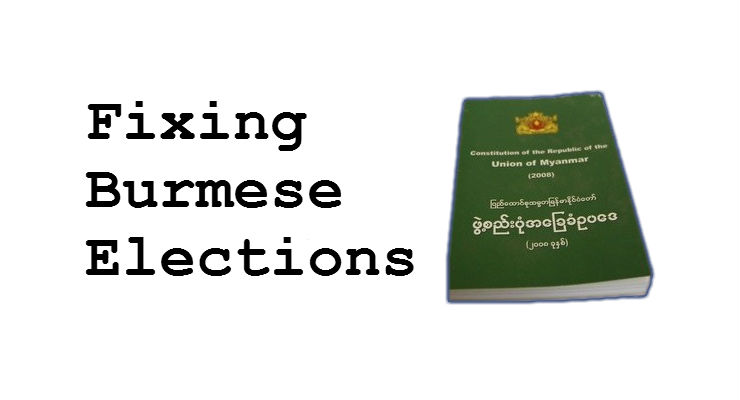
Driven by disappointment with Aung San Suu Kyi’s record in government, veteran activists in Myanmar are launching a new party, as youth consider new vehicles for change in an environment still dominated by the military. Divergent views on the Rohingya crisis, however, have frustrated key alliances.
Myanmar’s pro-democracy activists once were united around Aung San Suu Kyi in her struggle against military rule. Ethnic minority groups placed hope in her ability to bring peace to regions decimated by decades of civil war. Her National League for Democracy’s (NLD) landslide win in the 2015 election sparked optimism across a divided nation.
Since then, the NLD government’s poor record on civil liberties — retaining laws that restrict free speech and the right to protest — its treatment of civil society, and its approach to ethnic minority grievances have alienated influential backers in ways that arebeginning to alter Myanmar’s political landscape.
Winds of change
Ko Ko Gyi, a former Aung San Suu Kyi ally and student leader in the 1988 uprising against military rule that gave rise to the NLD, has for the last year been establishing a new political party with the hope of attracting democrats dissatisfied with the NLD.
Under Myanmar’s military junta, the 56-year-old activist spent more than 17 years in jail, including for his involvement in a demonstration to mark Aung San Suu Kyi’s receipt of the Nobel Peace Prize in 1991. Yet, despite his wish to run as an NLD candidate in the 2015 election, the party declined to nominate him.
His Four Eights People’s Party, named in reference to the “8888” general strike on August 8 during the 1988 uprising, is now in a standoff with the electoral commission after the group’s application to register as a party drew more than 200 complaints, purportedly from members of the public upset at the appropriation of a national movement.
The commission sent an email to Ko Ko Gyi on June 14 that gave the party a month to change its name, flag and logo to omit reference to “8888,” warning the application would be canceled if they failed to do so. The email, seen by VOA, cited the by-law that outlines the application and objections process, but did not state under what grounds the complaints were accepted.
The electoral commission, whose head was appointed by Aung San Suu Kyi, did not respond to a request from VOA to clarify the legal basis of their ultimatum to the party. Ko Ko Gyi told VOA the law was on his side and his group would not back down on its chosen name.
“We became a minority”
Ko Ko Gyi highlighted Aung San Suu Kyi’s failure to make meaningful progress in the now seven-year-old peace process with an array of ethnic armed groups.
“The peace process is running on one leg,” he said, through an excessive focus on armed leaders and a failure to “empower ethnic civil society.”
He said his primary strategy was to build alliances with ethnic parties in Myanmar’s conflict-riven borderlands on a platform of “equality” and “federalism.” Most of these parties lost heavily to the NLD in 2015 but stand to gain from disillusionment of minority groups with Aung San Suu Kyi’s failure to condemn fresh Myanmar army offences.
Ko Ko Gyi’s attempt to build a broad coalition faltered, though, when several prominent youth leaders left the nascent party late last year because of differences over the Rakhine State crisis, which spiraled in August after an army crackdown on Rohingya militants sent close to 700,000 Rohingya Muslims fleeing into neighboring Bangladesh.
Moe Thway, 38, who co-founded the pro-democracy youth group Generation Wave in 2007, and Thet Swe Win, 32, an interfaith activist, told VOA they left the party’s organizing committee because their own sympathy toward Rohingya claims for citizenship could not be reconciled with Ko Ko Gyi’s antagonistic view.
Ko Ko Gyi confirmed that that is why they and several other members left, but he declined to discuss his own views on the Rakhine State crisis.
Prominent youth activist Thinzar Shunlei Yi, 26, said she chose not to join the party for similar reasons, citing a generational divide in attitudes.
“We were raised in a more open society, more exposed to the world than the previous generation,” she explained.
Thet Swe Win said many young people in Myanmar also adopt a nationalist line that casts the Rohingya as dangerous illegal migrants.
“We became a minority,” he said of himself and the few other, mostly young, activists who dare to speak up for them.
Thinzar Shunlei Yi said the Rakhine crisis has been “a test of who is a real human rights defender and who is not. It was shocking for us. It felt like our work wasn’t paying off.”
Moe Thway said he and fellow youth activists are now strategizing about how to strike out in a more independent direction. And they are debating whether or not to found a new party.
“If the NLD welcomed all democratic forces, we wouldn’t have to form new parties. But they closed all the doors,” said Thet Swe Win.
The youth leaders acknowledged that Aung San Suu Kyi and the NLD remain broadly popular in Myanmar, and that criticizing the current government exposes them to public reproach.
Leave a Reply