I’ve been making a situation-evaluation, and making suggestions for what to do, what to demand. But there won’t be any elections to boycott until 2018 and 2020. And those gigantic pro-democracy demonstrations called for aren’t going to start this week, because in the meantime, it takes a lot of conversation until nearly everyone knows what’s wrong and what we all want.
So then, what can we do right now? I’m getting to that in this short article.
We hear progressive radio show-hosts talking about Trump (he’s a result, not a cause) floundering about what to do, and speaking in generalities. Not helpful.
But mostly, we hear progressives decrying Trump. They’re missing the point. Trump isn’t the problem—he’s only a symptom of the problem of which he’s only the latest result.
Heck, you want to know how Trump happened? He happened as an inevitable result of our believing in our phony, fictitious political system, our believing in the “elections”, participating in them, missing the point about the problem, and therefore not talking about it.
Anyway, back to my topic about exactly what we can do right now:
1. Media
I mentioned recently another root-cause, in addition to the phony elections (which we can’t do anything about today):
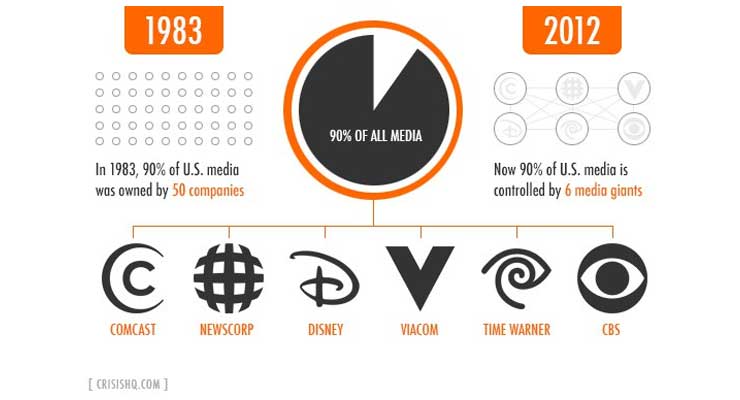
The dishonest, closed, corporate-agenda mass-media. With some honest media, there could be the communication among us that would give democracy a start and a chance. Things like what policy-options, candidates and parties exist and are “viable” and popular. The answers might surprise a lot of people, and take us in the direction of a new and better world. For real, this time.
The big TV networks are too big to quickly and easily deal with. But we have, all around the county, small local FM stations. If they all opened up to us with honest, open, participatory, agenda-free news and commentary, they could make a tremendous difference. The people who hear them are in contact with the rest of the town, participating in conversations all over town, on street corners, at colleges, at school and work, at home, etc.
The problem is that many or most of these potentially-helpful small local FM stations get their news and commentary from NPR, a corporate propaganda outlet that promotes all the premises that “justify” our wars and our phony “two-party system”, with no mention of (for example) the Greens, any alternative party, or any policy proposal or position differing from that of our corrupt, bought Republocrat politicians and their owners: the corporate rich.
While boasting that they explain the world to you, NPR represents a complete news-blackout of any alternative to the usual status-quo corporate agenda, tirelessly promoting that agenda.
Here’s what I’m getting at: These small local FM stations that carry the NPR propaganda outlet are relatively reachable, and isolatable.
Tell your local NPR FM station that, if they continue to carry NPR, instead of replacing it with honest, open, participatory local-origin news and commentary, then there will be no more contributions from you, and that you’ll cancel your subscription (or won’t start a subscription, if you aren’t currently subscribed).
Tell them that additionally, you’ll boycott their local business-sponsors.
Talk to other people, and suggest that they do that too. Post the suggestion everywhere. Say it in letters to the editor, and on local call-in shows, even on the NPR station itself (if it has any local call-in shows).
This can be done immediately, as an individual, without any organizing.
But, when some people agree that they’d like to do these things effectively, then, in addition to spreading the word about these methods, they could also organize demonstrations in front of local NPR FM stations. Line up in front of the station, where there’s plenty of visibility, maybe along the sidewalk. (Of course any demonstration should be completely legal, with a permit if needed).
Such a demonstration could have a big two-sided banner-sign saying: “No, __________ , we won’t subscribe to propaganda.”and inside the “___________” , fill in the call-letters of the FM station.
Of course, if the station chooses to disregard this request, or stall more than a few weeks about making that change, then the next thing to do is to actually unsubscribe from the station, and begin the boycott of their local business-sponsors.
And, while we’re at it, of course we should also boycott the sponsors of NPR itself including the companies and foundations by which NPR is “brought to you”.
This is the only way that we can start to get any genuinely honest media, without which we can’t really communicate with each other. Communication is essential. And it’s something powerful and effective that can be done right now.
2. Conversations
In the meantime, of course we don’t have any media-access, but conversation is always available to us. This includes wherever and whenever people talk in sidewalk conversations, restaurants, at work, at college, at school, at home, whenever friends, relative and acquaintances meet and discuss what’s going on in the world and the country.
Conversation that’s concentrated, first on the root-cause mechanisms (phony elections, dishonest media) instead of the results, and then on specific things to do like the immediately-easy radio-station boycott notifications and actual boycotts described above.
But I’m not just talking about conversations concerning immediate and specific things to do. All this time, conversation about the genuine actual causes or mechanisms behind the bad way that things are going…those conversations can spread, until nearly everyone knows what that mechanism is, and what the real situation is. The ways in which our “democracy” works is entirely phony.
Don’t underestimate the power of conversation, when people everywhere are talking to each other, frankly and pointedly, about what’s wrong—what’s really wrong then we can reveal the actual root-cause mechanism behind the results of our system of government..
How long can that phony democracy continue to be foisted on us, when everyone knows about it, everyone is talking to each other about it, and when everyone knows that everyone else knows about it?
When that time arrives, it won’t be necessary to “organize” pro-democracy demonstrations. They’ll be quite spontaneous. And towns that, by that time, have a city-council that agrees with that view, could allow big signs on sides of public buildings, stores, billboards, etc., pointing out that the emperor has no clothes, and that everyone knows it
3. Platforms
Another thing that you might enjoy all the while: Look at some party platforms. The platforms of all the progressive parties, including the Greens, and the Justice-Party, etc., share pretty much exactly the same change-proposals.
That’s because they’re responsive to what people want, offering reforms to achieve the things that people like and fix the things that people don’t like.
This includes things like a $15 minimum-wage, a 30-hour work week with no reduction in pay, universal medical care, more tax on the richest, and none on the working poor. Some parties advocate no taxes on incomes below the national average, made possible by a steeply-progressive marginal tax-rate on the highest incomes. Things like a month or more of paid vacation, and more sick-days allowed, to maybe catch up with Europe in those regards (and in regard to universal medical care). Things like no more “corporate personhood”.
Corporations aren’t people, and the when the Constitution spoke of rights of people, it didn’t mean the rights of corporations to buy up those rights and deny them to the public. And, likewise, money isn’t speech. Free speech doesn’t mean that a few rich people can freely exclude everyone but themselves and their employees from media access.
So, look at some party platforms to find out what is proposed and offered to replace what our corporate-rich-owned media and what our bought Republocratic politicians impose on us.
One option is the Democracy Chronicles Third Party Central page that names, shows the logos of, and links to many American party-platforms. When you get there, scroll down a few screens, past the articles, to The American Opposition. In that section, scroll down to the progressive parties. (Of course many of the articles are interesting and helpful too).
Those progressive party platforms give us an idea of what it could be like, if we had democracy. But first we have to get democracy, and that’s what this article has been about.
Leave a Reply