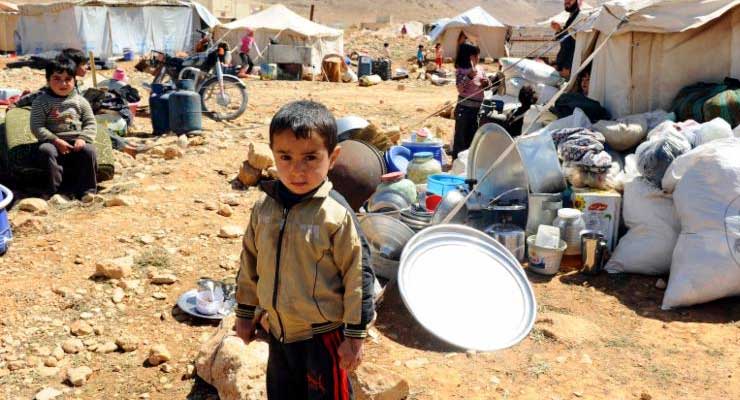
According to a recent Human Rights Watch report, an education crisis is thwarting the potential of half a million Syrian children living in Lebanon. Since Syrian refugee families understandably lack the financial resources to enroll children in private schools, most rely on the Lebanese public school system. Unfortunately, even though the Lebanon Crisis Response Plan claims to fully ensure Syrian children rightful accessibility to formal education regardless of refugee status, existing implementation of policy has failed to accommodate the large influx of non-Lebanese students—now twice the number of Lebanese students in public school.
The Lebanese government has attempted to deal with this national crisis by incrementally opening second shifts at 20 percent of public schools. By September 2014, the Ministry of Education announced 100,000 available spaces in the first shift and 57,000 in the second shift specifically designated for Syrian children. Yet still, the Vulnerability Assessment of Syrian Refugees in Lebanon, conducted in 2015, found that 48 percent aged 6-14 and 95 percent aged 15-17 were not participating in any formal schooling. The Reaching All Children with Education (RACE) policy, which aimed to enroll 470,000 Syrian refugee children in formal and non-formal education by 2016, quickly became a reach, and a RACE II plan was created with hopes to accomplish the same goal by the 2020-2021 school year.
As for non-formal programs run by Lebanese and international NGOs, most are unregulated. Thus, while essential literacy skills are taught, diplomas awarded are unrecognized. Fortunately, in early 2016, a framework for standardizing non-formal education was developed. Also, instead of relying on unofficial programs, the Ministry of Education has initiated their own learning pilot programs, teaching a condensed curriculum targeting refugee students who had missed a few years of schooling. Today, only a few thousand students have enrolled, and overall half of school-age Syrian children remain bereft of proper education.
There are several key contributors that work to prevent or hinder Syrian refugee children from enrolling, or push these children to drop out after registering. Firstly, there is a lack of local compliance and accountability in enacting enrollment guidelines. Though refugees only need an identification document, two small-sized photographs, and school certificates for the registration process, most directors ask for valid residency papers or payments for school fees. The additional enrollment requirements make it nearly impossible for most Syrian children to access formal education, as their refugee status prevents the extraneous demands from being met. In fact, the few official requirements in place are already reasonably significant, as families without valid residency often do not pursue the required identification documents for newborn children, and thus, may not have the essential paperwork.
Even if a refugee student is able to get through the registration process, the public school may cancel second shifts for certain grade levels if there are not enough students participating. Students, thus, are left with no choice but to repeat a lower grade level or quit school. And, due to high poverty rates for refugee families, work often becomes a higher priority than education. To add insult to injury, maximums established by public schools work to limit availability for Syrian children, as the number of refugees in a classroom cannot surpass the number of Lebanese children without approval from the Ministry of Education.
Language and safety barriers also lead to high rates of dropping out for non-Lebanese students. Since Lebanese public schools will begin to teach core classes in English and French beginning middle school without additional resources for struggling students, unfamiliar languages of instruction can deter students away. Even graver, the cultural gap puts Syrian children at a higher risk for harassment, corporal punishment and bullying from fellow students, bystanders, bus drivers, and school officials. The development of a second shift especially puts these children in a vulnerable position, as classes often end well into the evening, a time of the day marked by heightened danger along transportation routes into refugee neighborhoods.
Perhaps most tragic is that the trauma and psychosocial turmoil of being a Syrian refugee at such a young age increases the vitality of proper access to education. The restoration and future of Syria and the pursuits of these Syrian children in host countries depend on the fundamental skills that can be learned in a school setting. Lebanon’s welcoming enrollment policies need to be accurately implemented, and deeper measures need to be taken to ensure the safety and linguistic understanding of the Syrian children who are pursuing a formal education. For the time being, there should be an opener system embraced by the Ministry of Education that will allow NGOs to offer official credit for children participating in non-formal education.
Leave a Reply