
On April 23rd, Iranian President Hassan Rouhani told a crowd of supporters that US decertification of the Iranian Nuclear Deal would subsequently be met with “severe consequences.” This statement in and of itself exemplifies how bad the 2015 multilateral “deal” was. Any time you have to resort to coercion in attempts to convince other parties to remain in a multilateral-deal, then in all likelihood, said deal is not a proportionate one with reciprocal benefits to the parties involved.
Iran, much like everybody else, knows they are the beneficiary of this deal. No other country involved in the agreement benefits from it; if anything, the deal is a detriment to other countries in that it emboldened Iran, effectively enabling, its threatening of countries like Israel and Saudi Arabia. It wasn’t long ago that Ayatollah Khamenei was promising to eviscerate Israel.
The deal is not an enforceable one. Many superficial, ineffective measures are imposed that don’t prevent nuclear-proliferation; they just make it slightly more difficult. Iran’s existing nuclear facilities were placed under video surveillance of the UN; this means not much. What’s stopping the country from building new sites? The same question could be asked in regards to the atrophication of the country’s centrifuges.
What if the US does feel as if Iran is building new sites or malignantly-utilizing their existing ones? They can send an inspector to investigate — but not without a 24-day notice. These stipulations carry little threat against the antagonism Iran presently engages in.
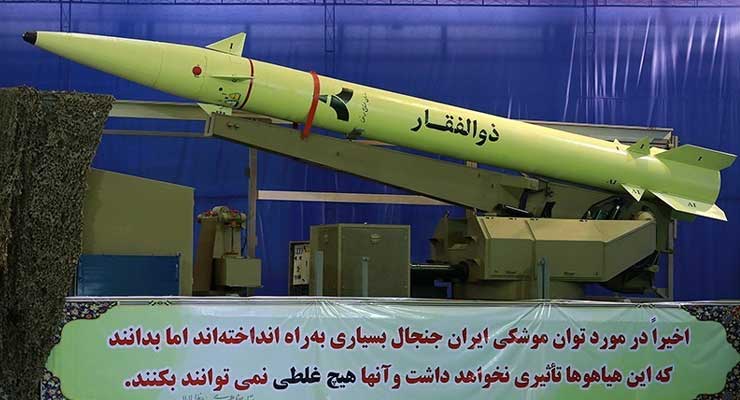
Amalgamate this with the fact that Iran has persisted in building its own ballistic-missile testing, and you have an even more complex situation. Many claim that these tests violate the deal, and create grounds for decertification. However, what is written in the deal itself pertaining to testing is far more ambiguous than many may believe:
“Iran is called upon not to undertake any activity related to ballistic missiles designed to be capable of delivering nuclear weapons, including launches using such ballistic missile technology.”
Simply calling upon a country to not do something certainly does not create a legally-backed prohibition of the action in question; it simply discourages it. This excerpt serves as a microcosm in embodying the failure and one-sidedness of the deal. From a legal standpoint, Iran is not violating the terms of the deal; the Obama Administration inadvertently enabled Iran’s aggression.
The agreement was well-spirited, sure. But it came up short in effectiveness. Neither the US nor its allies are more safe as a result of the deal; in fact, one could make the argument that its ratification exacerbated US-Iranian relations. Much of Trump’s foreign policy is predicated around restoring America’s power-status on the world-stage, so not treating Iran punitively could be perceived as a concession from the President. Simply put, Trump’s damned if he does, damned if he doesn’t.
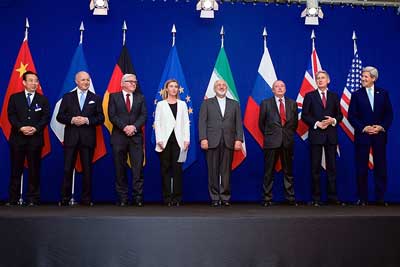

But there’s good reason for Trump to, at least for the time being, neglect Iran. Decertifying the deal at this juncture will make for nothing less than hostile-tensions and even if the US does decertify, the sanctions cannot be imposed to the degree in which they previously were without America’s allies joining again. The move would merely signify Trump’s objection to Rouhani and Khamenei’s actions, something in which he’s already done.
Don’t get me wrong, this agreement was and is a bad one; it should have never been made to begin with. Obama and company lifted effective sanctions in return for what was essentially a verbal-commitment from Iran that they would reduce their belligerence. And although it doesn’t appear as if President Trump is imminently planning to decertify the deal, he has weighed the possibility of doing so in the past, after having been a consistent opponent of the agreement.
Trump, at least for now, should simply not act on Iran. Exacerbating an already unstable situation would not be in America’s best interest. It could be perceived, or at least depicted, as a provocation, and could even stunt potential results in President Trump’s pending historical summit with North Korean dictator Kim Jong Un. Trump cannot afford to weaken Kim’s evidently-fearful perception of him. The erratic, unpredictable dictator will presumably be looking to use any advantage possible at the negotiating-table, and renewed-tensions with Tehran could provide an excellent opportunity for him to do so.
David Anderson says
Do you have a better plan for what to do about Iran than the deal?
Do you realize the deal only worked b/c the other powerful states backed it up? They’re not with us on this now.
Consider how our word and promise (already torn to shreds pretty much everytime Trump opens his big orange pie-hole) will be worth in …say…Pyongyang.
Does it disturb you that we’ve seen this before – with Iraq – and the inevitable war of choice that came after. Fox and Trump and the bloodsucker and warmonger so evil he actually glows in the dark, Boltin, as well as Fox are beating the drums to ANOTHER insane war which will make us stupider, poorer and more damaged?
David Anderson
NYC
Caleb J. Kot says
David,
I actually agree with you that Trump should not have withdrew the US from the deal; the headline of this article can attest to that. Iran did not violate the deal, simply because anything short of manufacturing a nuclear-weapon did not disobey the deal’s terms.
Popular consensus remains that Iran while Iran did not explicitly violate the deal, they did contravene the “spirit” of deal.
Regarding your question as to what I would have done differently:
1.) Prohibit Iran’s use of ICBM’s during the deal’s timeframe. The JCPOA nullified any preceding UN Resolution, including one that restricted Iran from testing ICBM’s. A simple ban on testing these specific missiles would have made it considerably difficult for Trump (or any other president) to pull from the deal if Iran were to have abided by this provision, while also laying ascertainable reasoning for decertification had they not.
A simple ICBM-testing ban would have been advantageous to the US and its allies. Iran could have continued to test SRBM’s, MRBM’s, IRBM’s, etc.
If they meant well and were sincere about not pursuing a nuclear-weapon, why would they need to test ICBM’s to begin with?
2.) The provision for the destruction of all documented-intelligence relative to building a nuclear-bomb, subsequently giving a basis for decertification if Iran were to re-pursue said intelligence, as they were caught doing recently.
Regarding the decertification’s implications in Pyongyang, I must disagree. If anything, it’s nulification shows Kim that if he is not willing to abide by not only the framework, but also the spirit of the deal, that there will be considerable repercussions as a result.