Years ago, when my youngest son was a toddler – two, maybe three years old – my wife was pulled over by a policeman. He asked for her driver’s licence. From the back seat, my son scolded the patrolman, demanding that he return his mother’s “picture,” as he called her driver’s licence. The policeman promptly did so after receiving his due correction from my young, bellowing civil rights enforcer.
I think that is how I feel now about Donald Trump and my current experiences as a US citizen. The Trump administration has made moves that are likely to threaten Medicare, daycare and other public assistance programmes that we pay for, while supporting what I believe is an ill-conceived war that is a great financial liability to the US. One to five trillion dollars more for the military is what the administration is talking about at this time.
If the Trump administration continues along this path, I fear that ordinary Americans will ultimately bear the cost of decisions over which they have little control. It is the ordinary citizen who cannot afford it, while corporate America and other powerful interests may benefit from policies that place greater burdens on working families.
I strongly oppose the policies of the Trump administration, what they represent and the direction in which I believe they are taking the country.
Democracy has a balanced sense of accountability and privilege. Everyone gets a seat at the table. Everyone gets to be heard. In the Trump administration’s approach to government, however, it seems to me that people with deep pockets have greater access to the microphone and greater influence over the direction of public policy.
The erosion of freedoms and the damage to institutions that I see are, in my view, consequences of an excessive concentration of power, political ambition and the influence of wealth. Public service should be understood as a responsibility to the public, not simply as a pathway to greater political or personal power.
Life is more than competition or the mere accumulation of assets. At some point, most wealthy entrepreneurs give back, share what they have accumulated or mature into something more honourable than they once were. Wealth and success should ultimately carry with them a responsibility to contribute to the broader society.
I worry about the legacy the Trump administration may leave behind. Political power and public office are temporary, while the consequences of political decisions can endure for generations. The question is not simply who occupies the White House today, but what kind of political culture and institutions will remain after that administration leaves office.
Trump’s willingness to confront institutions, challenge political norms and pursue an agenda that I believe disproportionately affects vulnerable people has become a defining feature of his political approach. It has also found support among sections of the church, the business community and the billionaire class that gave him his credentials and ultimately helped place him in the position of leader of the free world.
What a dichotomy of reality. What a train wreck of expectation.
By the time the Trump administration is out of power, it may be too late to reverse some of the precedents that have been established. Political and economic interests may already have benefited from changes that will be difficult to undo. Institutions can be weakened, freedoms can be diminished and political norms can be eroded long before the public fully recognises what has happened.
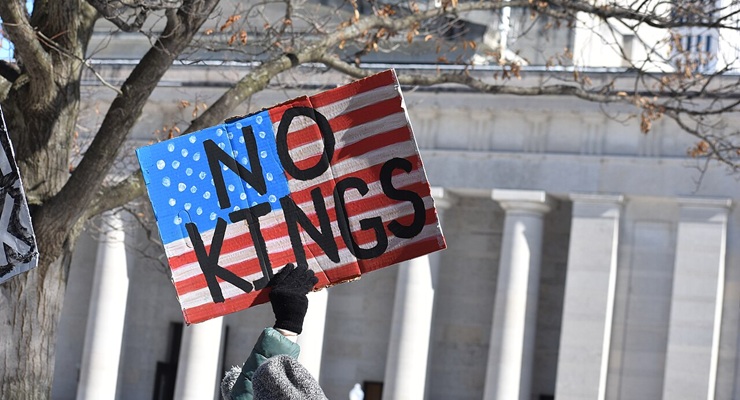
The No Kings movement may progress into something much larger. The wealthy at the top do not necessarily know or experience the same level of pain and frustration as you and I. They can often insulate themselves from the consequences of decisions that affect ordinary people.
I am prepared to march. I am prepared to protest. I am prepared to speak out and tell the Trump administration that we want our country back.
Jack Jones says
If we don’t impeach Trump soon, I’m concerned the country will be recklessly and thoroughly harmed. Even if we win the mid terms, he will use every trick in the book to remain in power and continue his campaign of destruction. The only way that Trump can bring back jobs with his current program is to burn this place to the ground and start over in a wasteland of low wages no healthcare or retirement, education ect. Essentially a third world country. Not to mention we’re facing a possible world war in the present time. That nobody wants except the violent and greedy.