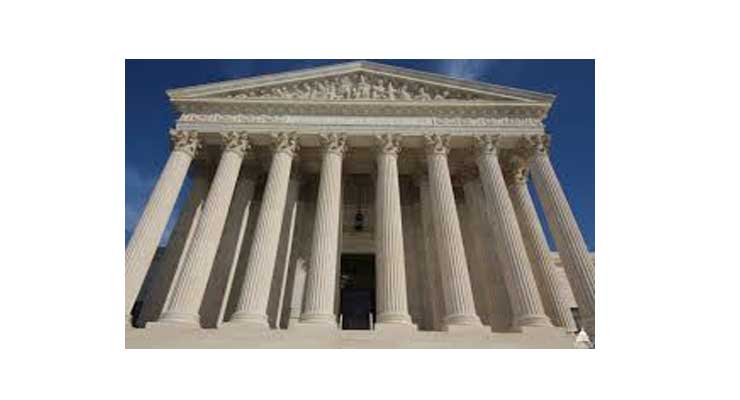
Earlier this month, the United States Supreme Court began to review the process of Gerrymandering in Wisconsin, after numerous complaints, mainly coming from Democrats that the Republican led legislature, unfairly re-drew the maps after the 2010 census.
The process of gerrymandering coincides with the census, which is required to be taken every ten years. However, in recent years it has become extremely political with politicians being able to draw those maps, and largely to the favor for the political party in the majority.
“When legislatures think about drawing these maps, they’re not only thinking about the next election, they’re thinking often, not always, but often about the election after that and the election after that, and that election after that,” Supreme Court Justice Elena Kagan said in referencing re-redistricting. Like many cases that come before the highest court in the land, the judges are divided amongst ideological lines as liberal justices are mostly in favor of a fix, while conservative justices are skeptical.
The case before the Supreme Court was brought up by several Democrat voters who sued in 2015. In the suit, they claimed that their constitutional rights had been violated. Their argument was validated by a three-judge panel in Wisconsin who rule 2 to 1 in their favor that the new maps had violated their constitutional rights, thus paving the way for the Supreme Court to review the case.
Whatever way the court rules will have a nationwide impact on how the political process is gone about throughout the country. “I think it’s huge,” said, Edward B. Foley, who is the director of the online Election Law project in Moritz College at Ohio State University.
The ruling also could affect upcoming Presidential races, as Wisconsin was a battleground state in 2016, and proved to be one of the deciding states. President Donald Trump won Wisconsin, 47.86 percent to 46.94 percent for challenger Hillary Clinton.
“The whole point is you’re taking these issues away from democracy and you’re throwing them to the courts,” Chief Justice John Roberts said regarding the case. Roberts expresses the view of many conservatives on the court who are skeptical of the complaints fearing court intervention would override the democratic process of overruling the elected lawmakers who drew the maps.
The process of gerrymandering goes all the way back to the 1800s, and future presidents during that period have been frustrated with the process as their congressional districts have been redrawn forcing them to retire early.
The issue of gerrymandering has brought strange alliances together as several moderate Republicans, one of which, former California Governor Arnold Schwarzenegger, has been the lead voice for Republicans against the process.
“A holding in their favor would politicize the courts and would go far beyond intervention in the political thicket, it would impale the judiciary on its thorns,” a statement by the Wisconsin Republican Party read.
The ruling will not only affect Wisconsin, but also several states that have had re-redistricting done. Some states include, Pennsylvania, Maryland, and North Carolina just to name a few. The several states that are included which could be affected, are Republican majority states, with the exception of Maryland being the lone Democratic state.
Democrats have long been opposed to the measure saying that it interferes with people’s constitutional rights.
According to a Brown University study, an incumbent member of the House of Representatives has a 98 percent chance at re-election. Furthermore, since the 2004 elections, an incumbent member of the Congress were 97.9 percent more likely to be re-elected. Many have blamed gerrymandering for the increase.
The court has said a ruling is expected by the summer.
In conclusion, the U.S Supreme Court should hear a case in which people feels their constitutional rights are violated however, if it believes the process is legitimate the justices should put aside their ideology and rule what is right with the law instead of ruling in favor of their ideology.
Links to sources:
- New York Times: https://www.nytimes.com/2017/10/01/us/wisconsin-supreme-court-gerrymander.html?module=ArrowsNav&contentCollection=U.S.&action=keypress®ion=FixedLeft&pgtype=article
- Journal Sentinel: https://www.jsonline.com/story/news/politics/2017/09/29/wisconsin-redistricting-case-u-s-supreme-courtcould-rewrite-rules-how-states-draw-their-election-map/701253001/
- ProPublica: https://www.propublica.org/article/partisan-gerrymandering-is-still-about-race
- Brown University Study: file:///C:/Users/Tmann/AppData/Local/Microsoft/Windows/INetCache/IE/B28RCSOB/incumbents.pdf
Leave a Reply