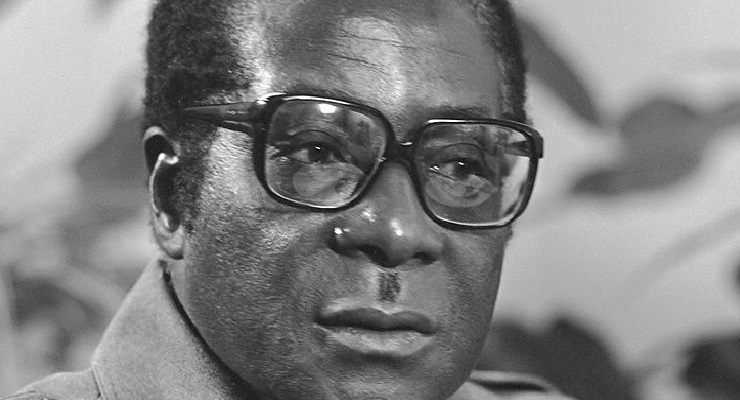

The sharp difference between the age of the recently elected President of France, Emmanuel Macron, and that of several African Presidents, 39 years for Macron as against a range 71 – 91 for several African Presidents, has rehashed discussions on the problematic of the significance of the age of African leaders in African politics. There are several angles from which this rapport can be studied including exploring the meaning of the age of these African Presidents for democracy in Africa.
Democracy in simple terms is a form of government in which power rests with the people. The people decide on the way the affairs of the State are run either directly or through representatives who are chosen through multi-party (democratic) elections to serve in the governing institutions. Democracy is an abstract concept and one must search through its principles to choose an empirically observable characteristic.
Since democracy is people’s government, it is essentially the opposite of one-man-rule as in the case of a monarchy. One-man-rule can happen either through the concentration of powers in the hands of a single person and/or the continued rule of a single person over a relatively long period of time. One-man-rule is incompatible with the idea of democracy because democracy builds on the reality of human and social dynamism which is seen in that people and society generally would not indefinitely endorse a single individual’s ideas on governance except if construed to do so.
All the individual citizens cannot have the same ideas as to how social problems should be tackled and therefore cannot be found to believe in only one individual’s idea on the issue. The prospection and retrospection game of elections permits the population to be able to exercise this social, natural and human characteristic of change and dynamism when it comes to choosing the leadership of a State that is supposedly democratic. That people would maintain one individual as ruler over a relatively long period of time through multi-party elections is therefore inconceivable in a democratic dispensation and incompatible with the concept of democracy as should be universally accepted.
One-man-rule through successive winnings in multi-party elections can therefore only happen through a botched democratic process transforming any such democracy into a nominal democracy. Following this, and focusing on the position of the chief executive, democracy can be captured as the extent to which a country exhibits the characteristic of being able to change its chief executive through multi-party elections over a given period of time. In order to make assurance doubly sure that this happens some democracies have, besides adopting free, fair, transparent, independent and repetitive or frequent elections, adopted limitation of mandates, usually a maximum of two mandates. Most mandates are four, five or seven years.
Therefore, we can set the “given period of time” mentioned in our attempted operationalisation of democracy between 10-14 years, that is, two to three mandates. Therefore, the level of democracy in our conceptualization can be assessed by the extent to which an incumbent can be replaced through democratic elections after no more than 14 years in power, usually two or three mandates depending on the duration of the mandate.
However, what has happened on the African continent since independence in the 1960s is that several African leaders have stayed in power for longer than this period of time. These Presidents often accumulate more than three successive mandates. Africa did see the abolition of multi-party democracy in the 1960s due to the Cold War. However, the (re)adoption of democracy since the early 1990s with the collapse of the Berlin Wall did not improve matters.
Several Presidents stayed in power for several decades securing more than three mandates or lasting in power more than 14 years. The accumulation of several mandates means that several of these presidents have grown very old in power. Following our conceptualization of democracy, the age of an African President could be taken to be an indicator of the level of democracy in an African country.
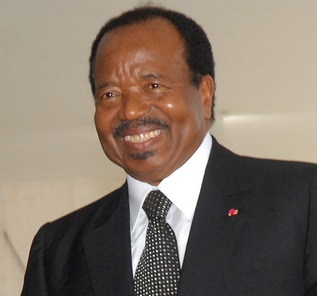
Presidents Robert Mugabe of Zimbabwe and Paul Biya of Cameroun, 91 and 84 respectively, are the most emblematic examples. When one has knowledge of an African President’s advanced age it is this issue of low level of democracy that comes to mind as seen in the difficulty to have alternation in power. Some of these Presidents who have stayed in power for so long brag about how their long stay in power is due to the fact that the people have kept voting them to power. They love to smile while they lecture the media on the merits of their misplaced and perverted conception of the people’s choice in a democracy.
However, a closer look into how their clearly nominal democracies function reveals that their electoral policies are not free, fair and transparent. Most of these long-stay Presidents have manipulated the electoral process in their favor, making it practically impossible for an opponent to win the elections. They have also put in place neo-patrimonial systems of Government and have encouraged voter apathy through various strategies. This is only normal as a nominal democracy with little or no alternation in power can be expected to have several traits of a non-democracy.
Therefore, when one comes across an aged African President one can first question how long he/she has been in power and for how many mandates and why? Usually, most of these Presidents have been in power for long and for more than two or three mandates and can be found to have maintained themselves in power through corrupt practices. As such, the significance of the age of African Presidents in African politics in terms of age and democracy can be seen in that the advanced age of African Presidents is usually an indicator of a low level of democracy. This is seen in the difficulty to obtain alternation in power as the current incumbent has maintained himself and grown old in power through manipulation of various democratic process like the constitution and the electoral manipulation and also through cooptation in a neo-patrimonial system.
Leave a Reply