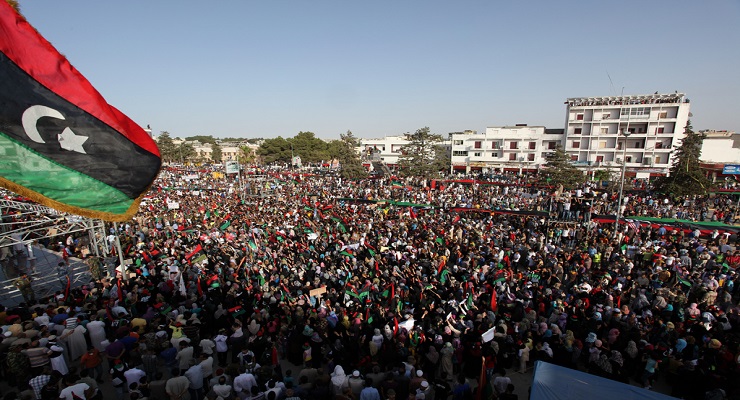
The demo-optimism that swept across the African continent as from the 1990s in democracy’s third wave has waned over time. Hopes for peaceful and frequent transition through multi-party politics and elections have been dashed by authoritarian leaders consolidating power through neo-patrimonial systems of politics in which democracy has become a mere façade and longevity in power sustained through state terrorism the norm.
However, there is a growing trend of protests against long-stay autocrats as seen in Tunisia, Egypt and Libya in 2011, in Burkina Faso in 2014 and in April 2019 in Algeria and Sudan all buttressed by demands for these autocrats to “go!” These dynamics have had varying outcomes, with some of countries sliding back to dictatorship (Egypt) or suffering a protracted civil war and State collapse (Libya), others witnessing some democratic advancements (Burkina Faso) and others transitioning to free liberal democracies (Tunisia).
However, the important element for our purpose is that these protests signal renewed demands for democracy, notably term limits, free, fair and transparent elections and a general rejection of dictatorial rule. Therefore, the absence of similar movements in other African States yoked by despots does not mean the populations in those countries don’t want change. There are historical and structural reasons retarding such movements in these States. Where they have taken place, popular movements against dictators must be considered as a wider aspiration of all African peoples trapped under despots to see transition to democracy.
The problem is then how to ensure that these aspirations are met. While western economic conditionality contributed to (re)democratisation in Africa in the 1990s the agenda driven nature of the West’s relations with Africa and the risk of renewed Cold War behaviour in Africa with the emergence of China and the return of Russian imperialism lead me to argue against external conditionality and suggest a joint leadership of free African States.
Risks associated with exogenous leverage for transition to democracy in Africa
Africa has historically been the battle field of imperialist agendas for world domination. In the middle of the 20th century, the Second World War brought Europe to the brink of collapse. Its devastating consequences led to the decision by the United States, Britain and other major powers to end colonisation. France, from the era of de Gaulle, has, however, demonstrated its disapproval of African peoples benefiting from this world freedom agenda.
Whatever the case, the decolonisation agenda led to independence for Asian and African colonies in the second wave of democratisation in which democracy also took roots in Germany, Italy and Japan and in most of Latin America. However, the Second World War was also followed by the Cold War (1947-1991), a struggle for international hegemony between the United States and the Union of Soviet Socialist Republics (USSR). This situation contributed to democratic reversals in Africa with many African States abandoning democracy for One-Party dictatorships that came to be riddled with socio-political instability and underdevelopment.
The Cold War ended in 1991 following the fall of the Berlin Wall on November 9, 1989. What happened in Africa was increasing demands for (re)adoption of democracy. African Presidents soon yielded to these popular pressures. However, it is argued that it was largely pressure from external donors, notably the Western powers who emerged victorious from the Cold War, that forced them to do so. One-Party dictator André Kolingba of conflict-ridden Central African Republic (CAR) is famously known to have openly admitted that he was going to accept re-democratisation only because those who were paying him (France and Bretton Woods Institutions) had ordered him to do so.
The lifeblood of Africa’s despots having always been western aid, the West’s alleged commitment to democracy in Africa could then be matched by new external economic conditionality – aid for term limits, credible elections and an end to State repression, refuse and sanctions follow. However, the entry of China and Russia’s rehabilitated imperialism under Vladimir Putin means that western conditionality would lead to Africa’s dictators turning East in the process rekindling Cold War battles in Africa. This is the danger of an exogenous leverage for the ongoing struggle for real transition to democracy in Africa and why Africa’s salvation must come from within Africa.
Endogenous leadership, a viable and credible alternative
Unfortunately, the African Union (AU) has been ineffective in ensuring that democracy, peace and security become a reality in Africa and is likely to continue being ineffective in this regard for the foreseeable future. One major reason for this is that African dictators, [especially those who have voluntarily placed themselves in the grip of France], are acting as spoilers. A solution appears to lie in a new form of leadership, one of joint character between free African States – liberal democracies that uphold civil and political freedoms.
The authors of a seminal article titled Joint Leadership and Regional Peacebuilding in Africa point to the potency of joint leadership in matters of peace and security integration arguing that no single African State is currently capable of leading the continent on issues of high politics such as peacebuilding. They point to democracy as an important parameter for candidacy in this form of leadership. While Nigeria is only partially free, they suggest joint leadership between Nigeria and South Africa based on other military-economic parameters.
However, on the question of promoting democratic rights and protecting human life, Africa’s free States – South Africa, Namibia, Botswana, Senegal, Benin, Ghana and Tunisia – should pride themselves with creating a League of Free African States (LOFAS) and work towards expanding membership to partially free African States. This will act as an important first step towards widening the number of democratic nations in Africa. These States will then work together to establish normative, economic, political and military frameworks as well as common positions to protect people in other African States trapped in the hands of despots.
Almost all African States have Constitutions with sections upholding the rights of African peoples to freedom and dignity to which they are entitled due to great suffering under slavery and colonial rule. Yet in many African States these laws are not respected due to dictatorial tendencies. Only Africa’s free States have the ability to hold the torch for African democracy. It won’t be external powers whose agenda on the continent has always been to grab Africa’s resources even through the support of dictators. LOFAS could be a tool for restructuring the African Union (AU) agenda by consolidating freedoms in its member States and supporting democratic progress in other African States.
David Anderson says
Good article. I think there is some hope given recent (incredible!) events in Sudan. That hope doesn’t come from the AU at all. They have an almost perfect record of negligence and being wrong for decades now.
Also…. good to point to China, in many respects it has been a negative force in Africa lately with the debt problem and their extractive attitude. They’re doing basically what the European colonial powers and the US did until very recently (and could be argued are still…).
Keep up the good reporting,
D. A. NYC