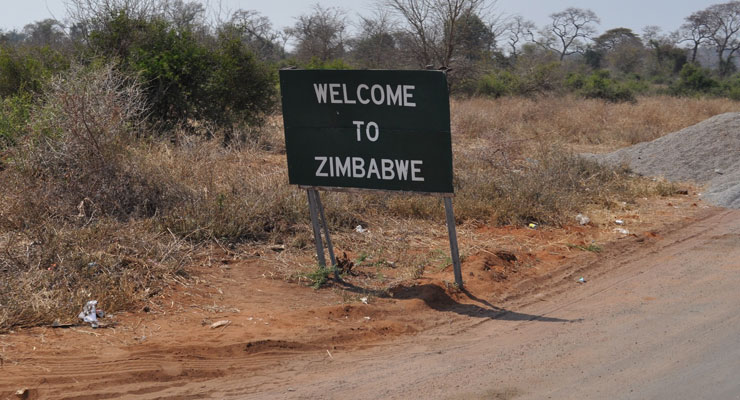
Zimbabweans head to the polls on July 30, 2018 in harmonized elections that will include an unprecedented presidential election. There are 23 presidential candidates in this year’s race, but only two are seen as viable contenders: the seemingly liberal incumbent Emmerson Mnangagwa of the ZANU-PF, and conservative Nelson Chamisa of the MDC Alliance (grouping of seven political parties). The outcome of the presidential election is thus set to have serious implications for Zimbabwe’s economy including perhaps a new foreign policy focused on securing a lifting of Western sanctions. Beyond this crucial expectation, there are other issues we need to know about the elections, notably the political and electoral framework for the election and, who Emmerson Mnangagwa and Nelson Chamisa, the frontrunners, are, their political assets and/or liabilities.
Is Zimbabwe a democracy? Political and electoral framework
Yes, Zimbabwe’s Parliament and President are democratically elected. The presidential, parliamentary and local government elections are to be held on the same day, in this case on July 30, 2018.


The Parliament has two chambers, the Senate (Upper House) with 80 members and National Assembly (Lower House- August House), with 270 members. Parliament’s term runs concurrently with that of the president. A total of 60 of the 80 seats of Senate are elected through the proportional representation system. This means that they are subject to the number of votes cast for each party at the National Assembly. Of the remaining 20 seats, 18 are reserved for the Council of Chiefs, whose members are elected directly from the over 200 Chiefs throughout the country’s eight provinces. The two remaining seats are reserved for the representatives of persons with disability. In the National Assembly, 210 of the 270members are elected directly through the popular vote whilst the remaining 60 members are women quota seats again appointed through the proportional representation system and calculated using votes attained by a party in the National Assembly votes for the directly elected 210 members.
In the case of the President, s/he is elected for a 5-year term renewable once. If no candidate gets 50 percent plus one of the votes cast during the first round of the presidential polls, a run-off is organized. Where this happens this year, the run-off is scheduled to take place on 08 September 2018.
The two front runners: Emmerson Mnangagwa and Nelson Chamisa
President Emmerson Mnangagwa who benefitted from the 14-21 November 2017 military coup d’état to come to power is seeking his first term in office after completing the term of the former president Robert Mugabe. The law says that if a person doesn’t serve at least three years of the term of the former president, then he/she will not have served a full term and therefore is eligible to seek re-election in ensuing two 5-year terms. Mnangagwa has been in the Presidential seat for less than a year and is therefore eligible to run for re-election.
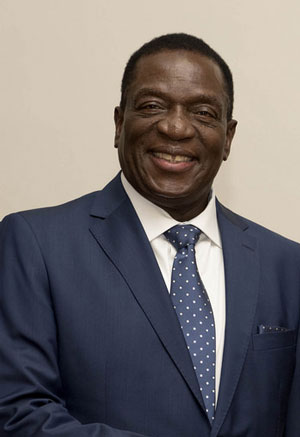
Mnangagwa is trying to portray himself as a liberal as he tries in vain to dissociate himself from the misrule of former president Robert Mugabe’s regime that he was part of for 37 years. His run for the presidency is seen as a ploy to “cure the coup” that brought him to power weeks after having been fired from both government and the ruling ZANU-PF party by Mugabe and associates.
At 40 years, Chamisa may have an appeal to the younger generation of between 18-40 years that makeup 64 percent of the over 5, 6 million registered voters. The young are frustrated bythe rhetoric of the ZANU-PF over the years and all the unfilled promises highlighted in well-crafted manifestos. With the unemployment and lack of social safety nets that jeopardize any prospects of a brighter future, they look up to Chamisa as an alternative to make things right for them and their children.
What are the issues?
Foreign policy: the question of sanctions
The President of the Republic does have considerable leeway to enact foreign and national policy. He is empowered to appoint thousands of officials across varying positions in the country’s administrative machine, a prerogative which can enable an incumbent tobuild a significant power base. These powers have certainly allowed Mnangagwa to steer the regime in unexpected directions, such as build renewed interests in re-engaging Britain and the United States on the land question that resulted in sanctions being placed on Zimbabwe in early 2000.
Mnangagwa came to power through a coup 10 months ago and has embarked on rebranding Zimbabwe on the international arena, overseeing a period of growing normalization of relations with Britain, the European Union (EU) and the United States.The question is whether if Mnangagwa wins the elections he would pursue this end-sanctions-policy.
The opposition, mainly the MDC Alliance, have been vocal critics of Mnangagwa’s new found charm on Britain and other Western countries. Mnanagwa worked with Mugabe for 37 years, occupying various cabinet portfolios and becoming Vice-President in December 2014. These critics, therefore, argue that Mnangagwa is no different from Mugabe as they both oversaw the processes that resulted in sanctions and the demise of the country through ill-advised political decisions. They have also criticized Mnangagwa for pandering to the West, signaling that it is only opposition that can make a true shift of diplomatic gears and remove Zimbabwe from the current heightened tensions with Britain and her allies.
In effect, an opposition victory by Chamisa and the MDC Alliance would likely not derail the rebranding of Zimbabwe. If anything, it will probably improve chances of the United States uplifting sanctions through the Zimbabwe Democracy and Economy Recovery Act (ZIDERA) which was recently amended, giving pre-conditions for sanctions to be removed. The conditions include such provisions as demilitarization of the Zimbabwe Electoral Commission (ZEC), allowing political parties to witness printing of ballot papers, allowing international observers during the harmonized elections etc.
The economy
Mnangagwa billed the removal of sanctions as one that would thrust open the gates of economic opportunity, bring the country out of isolation and create millions of jobs. Mnangagwa’s ascendency to power has brought a string of billion-dollar deals allegedly waiting for a free, fair and credible election to be put into action. With unemployment said to be hovering at around more than 80 percent and a government debt of about US$14 billion and high level of corruption that Transparency International Zimbabwe estimated to be costing the country US$1 billion in lost revenue in 2016, the winner of the presidential election has a tough task ahead.
Who is going to win?
It is difficult to ascertain who between Mnangagwa and Chamisa is going to win. A credible poll undertaken by Afrobarometer concluded that Mnangagwa will get 42 percent of total votes whilst Chamisa will get 33 percent of total votes meaning that the election may be headed for a run-off. However, reading the mood in recent weeks, it might not be surprising if Chamisa seals a win in the first round of the presidential election. Chamisa’s MDC Alliance has been able to campaign in rural places that were no-go areas during Mugabe’s reign. Chamisa’s party has cloaked over 60 rallies throughout the country and seems to be the most serious of all the parties. However, numbers at political rallies may be misleading if they don’t translate to votes and others argue that grassroots community rallies are more tailored and effective than star rallies.
The key question in my opinion is whether Zimbabweans still want empty promises from the ruling ZANU-PF or whether they are willing to elect a new president who will put rhetoric aside and deliver on the kind of promises that put food on their table.
David Anderson says
Good article, though I’d put “economy” before everything else as that seems to be the most pressing issue.
Let’s keep our fingers crossed for Zimb – good people in a bad system.
Iconic national parties like ZANU-PF (or the ANC) seem to get more and more sclerotic as the years go by and become more entrenched, and corrupt. That dynamic seems the most important one to break, politically, while (its just my opinion, and I’m no expert here) the * currency * problem and relationships with EU and US banks has to come first.
Good summary though, thank you.
D.
NYC
Farai says
Many thanks for your opinion.Yes, removal of sanctions will re-energise the economy which will lead to better prospects of re-introducing the Zim $. However, the bar set by the ZIDERA Amendment bill in the U.S for removal of sanctions is too high and difficult to attain