
It is a widely held view that the strength of any democracy depends on citizen participation on issues of governance. Voters have a responsibility to hold their leaders accountable not only through an election but also through various other platforms such as constituency meetings, lobbying and through both electronic and print media debates. However, the failure by citizens to exercise their democratic right through voting is a cause for concern in Zimbabwe. In simple terms, voter apathy is when an eligible voter absconds from voting. However, the term voter apathy does not necessarily include those who had a valid reason for not participating in the electoral process.
Since 1980, Zimbabwe has held nine national elections and two referendums. The highest voter turnout was witnessed during the 1980 general election. This can be attributed to that electoral provisions were relaxed and simplified for the first democratic elections were the indigenous people for the first time allowed to cast their ballot. Voters only needed to be at least 18 year and was required to produce only his/her national identification card whether or not they were on the voters roll. As a result, voters turned out in huge numbers. This huge turnout has never been repeated again due to several factors.
Firstly, the intimidation and violence that has become to be associated with general elections in Zimbabwe has forced many people to lose interest in elections.
Secondly, Zimbabwe Electoral Commission (ZEC) is not undertaking continuous voter registration as instructed by the Constitution and electoral laws.
Thirdly, some people are fed up with the current status quo were they vote at every general election but the government fail to deliver on its promises.
Fourthly, the ZEC has not been more active in voter education which is very important especially for will be first time voters.


Finally, the issues of social exclusion and political disenfranchisement have had a bearing on voter attendances. In all these factors and more, ZEC has cited lack of resources as the major hindrance. Government through treasury has done little to deal with the crisis. ZEC chairperson Justice Rita Makarau last year told the parliamentary committee on justice, legal and parliamentary affairs that ZEC workers sometimes resorted to using their personal resources to sustain the electoral body to carry out its mandate.
A look at the trend in voting in Zimbabwe reveals that the number of people casting their ballot at each general election has been fluctuating. According to election watchdog Zimbabwe Election Support Network (ZESN), “Report on the 31 July 2013 Harmonised Elections” (see p.12): “Over the years, voter turnout has slowly been decreasing. It was 94 percent in 1980, 84 percent in 1985 and 47 percent in 1990. Even in 2000 when there was increased competition on the electoral field, voter turnout was only 52 percent”. In 2008 general election voter turnout was 42.7 percent which increased to 53 percent during the 2013 harmonized election.
Worldwide Voter Apathy
The issue of voter apathy is not unique to Zimbabwe. Worldwide, voter numbers are dwindling due several factors such civil wars in some countries, time constraints and general lack of interest. Trends in countries like Botswana indicate that voter turn-out is slowing down. The Botswana parliament reduced the minimum age to qualify as a voter from 21 years to 18 years as a way to get more people participating in electoral processes.
However, there are other countries such as the United States which recorded commendable increase in voter turnout during last year’s presidential election won by Donald Trump. According to the United States Elections Project, 139 million people (60 percent of the estimated 232 million eligible voters) voted in last year’s presidential election as compared to 132 million in 2008 election won by former president Barack Obama.
This marked improvement in voter turn-out can be attributed to increase in United States overall population and massive online voter registration initiatives by for example Facebook Messenger which lead to parent company CEO Mark Zuckerburg, to write a note on his Facebook page saying that: “Overall, I am proud of our role giving people a voice in this election. We helped more than 2 million people register to vote, and based on our estimates we got a similar number of people to vote who might have stayed home otherwise. We helped millions of people connect with candidates so they could hear from them directly and be better informed” (posted 21 November 2016).
2018 Election in Zimbabwe
In preparation for the 2018 harmonized elections, ZEC intends to roll out biometric voter registration within a short period of time. There are questions being raised as to whether the time will be enough for all people who may want to register. Others argue that ZEC should not close the process since the electoral laws states that voter registration is a continuous process. Still, there are others arguing that Zambia with a more population as compared to Zimbabwe managed a biometric voter registration in about seven months. Hence they argue Zimbabwe can complete the process in less time.
There is however, another problem; the ruling ZANU-PF party is rolling out its own process of re-registration of its members capturing biometric features the same process ZEC will use. Some political analysts have questioned the timing and why ZANU-PF is undertaking a similar process at party level. However, ZANU-PF has denied any malicious intent arguing that the process of issuing new party identification cards after capturing a member’s biometric features begun in 2014 and that the biometrics are only intended for its party database.
There is a widely held view that the 2018 elections will be won through the youth vote. According to Zimbabwe Statistical Agency (ZIMSTATS), the youth makes up 67 percent of the total population hence there are probably the decisive factor during next year’s elections. ZANU-PF is aware of this and has been on the forefront of initiating a youth driven voter campaign.
For instance, the 2014 cabinet reshuffle where the now under fire Saviour Kasukuwere was appointed minister of Local Government and National Housing was strategic in that he will drive the party’s youth agenda through dishing out residential stands to the youths as a way of canvassing for votes which brings the issue of voter buying into the foe. This was confirmed during in 2016 during the Norton (a town about 40 km (25 miles) west of the capital city Harare) parliamentary buy-election where ZANU-PF was reported to have given youth more than 7 000 un-serviced residential stands.
A Non Governmental Organization (NGO), Residents Forum approached the High Court arguing that by only giving residential stands to youth that support them ZANU-PF was ample evidence of partisan politics. A High Court Judge ruled that ZANU-PF should stop being partisan in the allocation of residential stands. However, ZANU-PF still went on to lose the by-election to an independent candidate Themba Mliswa. In Zambia, the 2011 general elections won by the late president Michael Sata is evidence of youth factor in deciding an election when they vote in numbers.
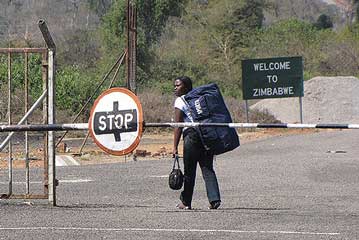

There are 22 countries worldwide where the government does not accept voter apathy. A total of 12 of these countries are in Latin America examples include Brazil, Costa Rica, Argentina and Bolivia. Elsewhere examples include Democratic Republic of Congo, Egypt, Belgium Singapore and Australia. Voters are obliged to vote in elections. Voters who do not turn up on polling day without an acceptable reason are either fined or sentenced to community service.
Analysts are divided on whether this strategy of voter by numbers actually brings the desired results. Opponents argue that undecided voters, who are “forced” to cast their vote, spoil the outcome of the election since they will normally vote on impasse without any appreciation of the critical issues and understanding of how governance systems work. Whilst the proponents argue that it allows every voter to contribute in shaping the democracy and sustainable development they want rather than having people who for example complain about the under- performance of a government they did not choose.
Whether or not this strategy can be borrowed and modeled to work in Zimbabwe is another issue. What’s critical at this stage is for the government to take serious steps to resource the Zimbabwe Electoral Commission so that it can effectively carry out its mandate of managing the electoral process in terms of section 239 of the Constitution and electoral laws. The electoral and procedural reforms being agitated for by the opposition parties and NGOs if implemented have the potential of increasing voter turnout during the 2018 vote.
Sydicks Muradzikwa says
Good analysis mate though I wanted to hear on how the problem should be addressed